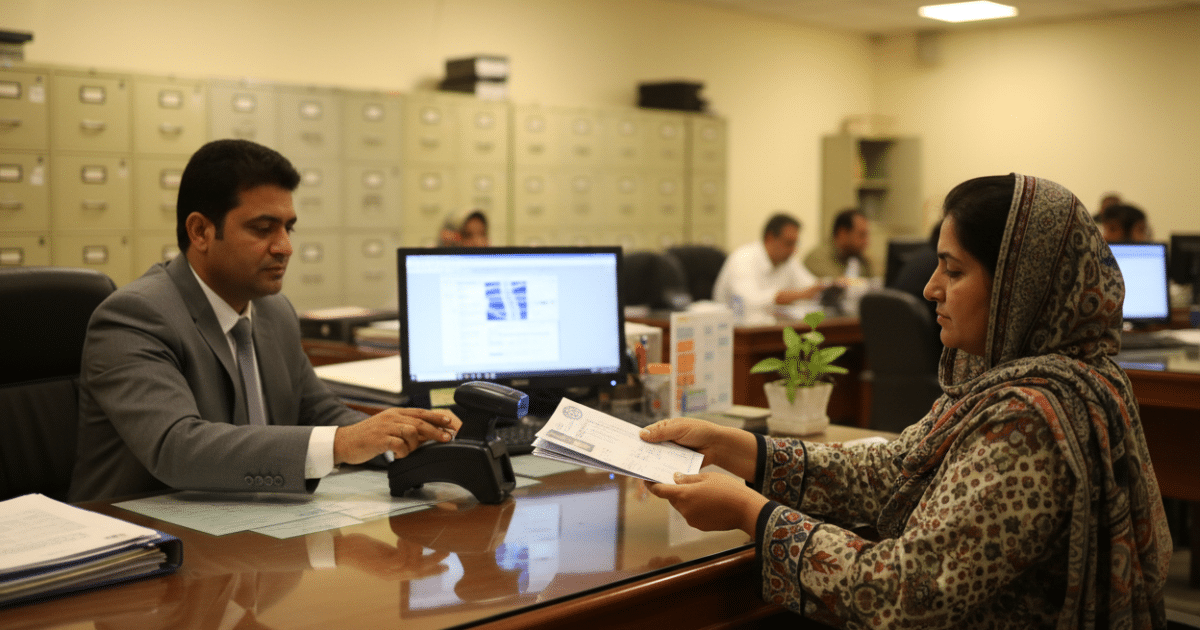
The Benazir Ehsaas Program document verification process has been formally strengthened in 2026, requiring all registered beneficiaries to confirm their eligibility through official BISP offices. Families who skip this step risk having their payments delayed or suspended entirely. The government's goal is clear: eliminate ghost registrations and ensure that financial aid reaches only those who genuinely qualify.
Pakistan's social safety net has always faced one persistent challenge — keeping beneficiary data accurate. Millions of low-income families depend on the Benazir Income Support Program (BISP) for survival, yet outdated records and fraudulent registrations have long undermined the system's integrity. The government's response in 2026 is a stricter, more structured document verification drive conducted directly through BISP Tehsil offices across the country.
This isn't a minor administrative update. It's a fundamental shift in how Pakistan manages welfare distribution.
Document verification at BISP offices is now mandatory in 2026
The Government of Pakistan has introduced tightened verification policies under the Ehsaas Program framework this year. Every registered beneficiary, particularly women listed as primary recipients, must now physically visit their nearest BISP Tehsil office during official working hours to confirm their status.
The core of this process involves biometric verification carried out by authorized BISP representatives. This step alone eliminates a significant share of fraudulent claims, since fingerprints and identity data must match what's stored in the NSER (National Socio Economic Registry). After biometric confirmation, BISP agents update the beneficiary's household data and formally confirm eligibility in the central system.
Beneficiaries who do not complete document verification at an official BISP office risk having their 2026 payments suspended or delayed indefinitely. Visit only authorized offices and never share personal information with unauthorized agents.
What the updated NSER policy changes for beneficiaries
The NSER update is more than a data-cleaning exercise. When a household's information is refreshed in the registry, it directly influences payment eligibility, payment amounts, and access to future government assistance programs. Families with incomplete or outdated records have found themselves locked out of disbursements, not because they were ineligible, but because their paperwork didn't match.
NADRA (National Database and Registration Authority) plays a supporting role here. If a beneficiary's CNIC (Computerized National Identity Card) has expired, or if household records are incomplete, the correct path is to resolve those issues at NADRA first, then proceed to the BISP office. Skipping this sequence is one of the most common reasons verification fails.
The five-step verification procedure
The process is straightforward when beneficiaries arrive prepared:
- Visit the nearest BISP Tehsil office during official working hours
- Bring all required documents, including the original CNIC
- Undergo biometric verification with a BISP representative
- Allow NSER data to be updated if discrepancies are found
- Receive confirmation of eligibility status in the BISP system
Documents to bring include the original CNIC, a NADRA-issued Form B for children in the household, household information details, a registered mobile number, and proof of income if requested.
How to check eligibility before visiting the BISP office
Before making the trip to a Tehsil office, beneficiaries should verify their status through the 8171 SMS service or the official web portal. This preliminary check saves time and helps identify whether a visit is actually needed. For those wondering about the fees associated with using the 8171 SMS service, the process remains accessible to most mobile users across Pakistan.
SMS verification via 8171
The SMS method is the fastest way to check status:
- Open the phone's SMS application
- Type the 13-digit CNIC number (no spaces or dashes)
- Send the message to 8171
- Wait for the automated response confirming eligibility status
Web portal verification
For those with internet access, the 8171 web portal offers a slightly more detailed status check. Enter the CNIC number, complete the verification code, and click "check status." The portal reflects real-time data from the BISP system, making it a reliable first step before any in-person visit. Beneficiaries can also use this channel to track their March 2026 BISP payment installment and confirm whether funds have been released.
Always check your 8171 status before visiting the BISP office. If you receive a notification message from 8171, treat it as a prompt to act immediately — delays in responding can push back your payment timeline.
Payment amounts linked to verified status in 2026
The financial stakes of this verification process are significant. Several payment figures are circulating in 2026 under the broader BISP and Ehsaas umbrella:

| Program / Payment Type | Amount (PKR) |
|---|---|
| BISP January 2026 payment | Rs. 13,500 |
| BISP 8171 standard payment | Rs. 14,500 |
| Combined BISP 8171 payment 2026 | Rs. 28,000 |
| Pakistan Eid-ul-Fitr 2026 Relief | Rs. 25,000 |
| Bewa Sahara Card (Punjab, widows) | Rs. 150,000 |
| Nigehban Card (Punjab) | Rs. 10,000 |
Each of these disbursements is tied directly to verified status. A beneficiary whose record hasn't been confirmed in the BISP system simply won't receive the funds, regardless of prior eligibility. For families tracking the Rs. 14,500 payment, understanding why some BISP payments get delayed is just as important as completing verification itself.
Punjab-specific programs, including the Nigehban Card offering Rs. 10,000 in support and the Bewa Sahara Card providing up to Rs. 150,000 for widows, also require that beneficiary data in the national registry is current. Families in the province interested in the Nigehban scheme can find detailed guidance on how to check Nigehban Card eligibility via 9999.
Common verification problems and how to resolve them
Not every beneficiary walks out of the BISP office with confirmed status on the first visit. Several recurring issues can block the process, and understanding them in advance reduces frustration.
CNIC mismatch with NSER data is the most frequent problem. If the name, address, or household composition on the CNIC doesn't align with what NSER holds, the system flags the record. The fix requires updating NADRA records first, which can take additional time.
Expired CNIC is another common blocker. BISP representatives cannot process a biometric verification against an expired identity document. Renewal at NADRA before the BISP visit is the only path forward.
Biometric verification failure sometimes occurs due to physical conditions affecting fingerprint quality, particularly among older women or manual laborers. In such cases, BISP offices have alternative procedures, but beneficiaries should be prepared for a longer process. Those who have encountered this issue before can review the available options for resolving biometric verification problems through official channels.
Incomplete household records affect families where members haven't been formally registered or where children lack Form B documentation. Completing these records at NADRA before visiting BISP is the standard resolution.
If your CNIC is expired or your household data is incomplete, visit NADRA first to update your records before going to the BISP Tehsil office. Attempting verification with incorrect documents will not accelerate the process — it will only delay it.
One risk that deserves direct attention: unauthorized agents operating near BISP offices. These individuals sometimes offer to "assist" with verification in exchange for fees or personal information. The government has flagged this as an ongoing concern. Beneficiaries should interact exclusively with official BISP staff, never hand documents to third parties, and report suspicious activity at the office.
The broader outcome of this verification drive extends beyond individual payments. By cleaning the BISP beneficiary database of false registrations, the government creates a more accurate foundation for future welfare programs. Families who complete the process correctly position themselves not only for uninterrupted 2026 disbursements but also for priority access to any additional assistance schemes announced through the Ehsaas Program going forward. Millions of low-income households across Pakistan stand to benefit, provided they engage with the process promptly and through the right channels.