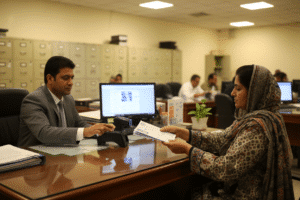
BISP 8171 is Pakistan's primary digital verification system for social assistance payments in 2026, allowing beneficiaries to confirm their eligibility and payment status for programs ranging from the quarterly Benazir Kafaalat installment to the Rs. 25,000 Emergency Relief. Two methods exist: the official web portal at 8171.bisp.gov.pk and a direct SMS service to the code 8171, both free of charge and available nationwide.
The Benazir Income Support Programme continues to serve as the government of Pakistan's main safety net for vulnerable households, including widows, unemployed individuals, persons with disabilities, and low-income women. With the reinforced digital verification system launched in 2026, millions of registered beneficiaries can now check their payment status within seconds, without traveling to a BISP office or relying on third parties.
But knowing which payment applies to your situation, and understanding exactly how to verify it, makes a real difference between receiving funds on time and missing a cycle entirely.
Two ways to check your BISP 8171 payment status
Online portal verification at 8171.bisp.gov.pk
The fastest method for beneficiaries with internet access is the official portal. The process is straightforward:
- Open a browser and navigate to 8171.bisp.gov.pk
- Enter your 13-digit CNIC number — without any dashes or spaces
- Complete the captcha verification
- Click "Maloom Karein" or the Submit button
- Your current payment status will appear on screen
The most common error at this step is entering the CNIC in the wrong format. The system requires a continuous 13-digit string such as 3520212345671. Entering 35202-1234567-1 with dashes will return an error. This single formatting mistake accounts for a significant share of failed verification attempts.
Never use a third-party website claiming to check your BISP status. Only 8171.bisp.gov.pk is official. Fraudulent sites collect CNIC data and can expose beneficiaries to identity theft.
SMS verification via the 8171 code
For beneficiaries without reliable internet access, the SMS-based verification method is equally valid and completely free. To use it:
- Open your phone's messaging app
- Type your 13-digit CNIC (no dashes)
- Send the message to 8171
- A reply SMS will confirm your payment status and eligibility
The 8171 SMS service was relaunched and reinforced in 2026, making it more reliable than in previous years. If you are not receiving a reply or the service appears unresponsive, a separate guide covers the common reasons the 8171 SMS may not work and how to resolve them quickly.
BISP payment amounts and what each one covers
Understanding the different payment types under the Benazir Income Support Programme prevents confusion when checking your status. Not every amount circulating online applies to every beneficiary.
| Payment Type | Amount | Frequency |
|---|---|---|
| Benazir Kafaalat | Rs. 13,500 | Quarterly |
| Bonus Ramzan Relief | Rs. 1,000 | One-time |
| Emergency Relief | Rs. 25,000 | Disaster only |
The Rs. 10,500 figure referenced in many searches typically reflects a partial installment or an older payment cycle. The Rs. 25,000 Emergency Relief is not part of the regular quarterly schedule — it is released exclusively during declared disasters or floods, district by district, not simultaneously across the country.
Payments are distributed through several authorized channels: HBL Konnect agents, Bank Alfalah partner branches, designated BISP payment camps, and other approved collection centers. Biometric verification is mandatory before any cash withdrawal. If you are experiencing issues with biometric authentication, visiting your nearest Tehsil BISP office with your original CNIC, registered mobile number, and children's B-Forms (if applicable) is the correct resolution path. A detailed walkthrough is available for those dealing with biometric verification problems that are blocking payment collection.
The PMT score and NSER eligibility criteria
Eligibility for BISP payments is determined through the PMT (Proxy Means Test), a scoring system that measures a household's financial condition based on data collected during the NSER Dynamic Survey. To qualify, a household's PMT score must remain below 32. Households that see income improvements risk losing eligibility if their score crosses this threshold during a re-assessment.
The NSER (National Socio-Economic Registry) functions as the central database. Every beneficiary's household data is periodically reviewed through the NSER Dynamic Survey. Failing to complete this survey when required leads directly to payment suspension. Documents needed for the survey include:
- Original CNIC
- Children's B-Form
- Electricity or gas bill
- Registered mobile number
If your household data in the NSER is outdated, payments can be paused until the information is refreshed at your local Tehsil BISP office. New registrations also require a verification delay before the first payment is processed.
Common reasons payments are blocked or delayed
Payments are released district by district across Pakistan — not all at once. If your neighbors have received their installment but you have not, your district may simply be scheduled for a later release date.
Several specific conditions cause BISP 8171 payments to stall. Biometric verification failure creates a temporary transaction block that resolves at the next payment cycle after the issue is corrected at a Tehsil office. An incomplete or overdue NSER Dynamic Survey suspends payments until the household re-registers. Outdated NSER data produces the same result.

Improved household income that pushes a PMT score above 32 will trigger a loss of eligibility, which is not a system error but a program rule. For beneficiaries whose payments have stopped without an obvious explanation, the full breakdown of why BISP payments get delayed covers each scenario in detail.
The BISP 8171 Card 2026 and new payment infrastructure
2026 also marks the broader rollout of the BISP 8171 Card, a dedicated payment card designed to reduce reliance on cash agents and streamline disbursements. This card integrates with the existing biometric verification system, meaning beneficiaries still need to authenticate their identity before accessing funds. The card can be used at designated centers and select banking partners.
This shift is part of the government's broader push toward transparent, traceable payments. The Benazir Kafaalat program, which forms the backbone of regular assistance, distributes Rs. 13,500 per quarter to eligible households. For beneficiaries seeking clarity on how to collect their most recent installment, the guide to BISP payment collection centers provides location-specific details.
Fraud prevention and official contacts
The BISP 8171 verification system is 100% free. No registration, re-registration, or status check involves any fee. Any individual or agent asking for payment in exchange for BISP enrollment or verification is operating fraudulently.
Only trust SMS messages originating from the number 8171. Never share your CNIC number or OTP with anyone, online or in person. Collect payments exclusively at authorized BISP camps, HBL Konnect agents, or Bank Alfalah branches.
BISP official helpline — free, available nationwide
The official BISP Headquarters is located in Islamabad. For biometric issues, NSER survey problems, or payment disputes, the correct first step is always the nearest Tehsil BISP office, not an unofficial agent or a paid intermediary. The helpline 0800-26477 handles general inquiries and can redirect beneficiaries to the appropriate local office.
Beneficiaries enrolled in similar provincial programs, such as the Nigehban Card assistance scheme, can use comparable SMS-based verification logic, though the codes and portals differ. The underlying principle of free, CNIC-based digital verification applies across Pakistan's main social support programs in 2026, making it easier than ever to confirm eligibility and track disbursements without leaving home.