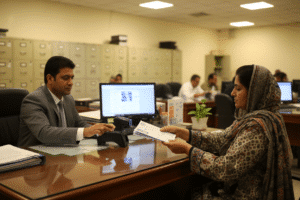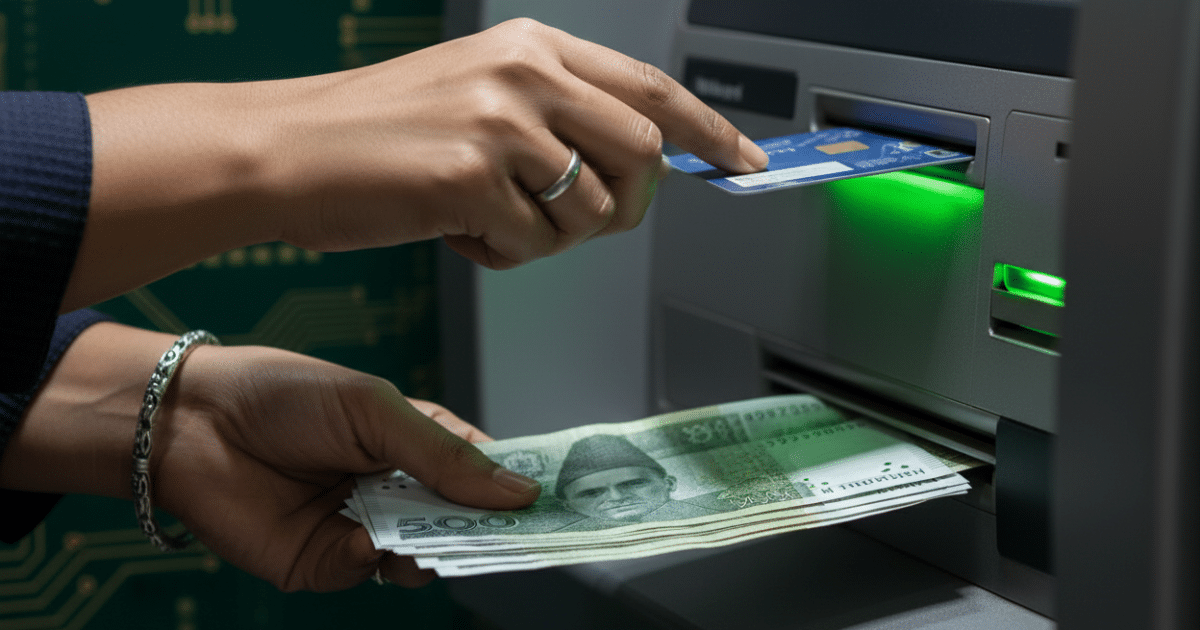
The Benazir Income Support Programme (BISP) now allows registered beneficiaries across Pakistan to withdraw their cash assistance directly from ATM machines at partner banks including HBL and Bank Alfalah. The March 2026 installment has been released for eligible families, and the entire process — from biometric verification to cash collection — can be completed in minutes at any authorized ATM.
The shift toward ATM-based disbursement marks a real change in how Pakistan's largest social protection program reaches its beneficiaries. For millions of low-income families, standing in long queues at payment centers has long been the norm. The ATM system, backed by NADRA's biometric infrastructure, offers a faster and more secure alternative that is now accessible nationwide.
But knowing the exact steps matters. A wrong entry, a skipped verification, or an unregistered CNIC can block a payment entirely. This guide walks through every stage of the process, from the ATM withdrawal itself to online balance checks and enrollment procedures.
How to withdraw BISP payment through ATM
The process at the ATM is straightforward once you understand what to expect. Partner bank machines — primarily HBL and Bank Alfalah — are equipped with a biometric fingerprint device attached to the terminal. This is what separates BISP withdrawals from a standard bank transaction.
Step-by-step ATM withdrawal process
Here is the complete sequence for collecting your BISP 8171 payment through ATM:
- Locate an authorized ATM from a BISP partner bank (HBL, Bank Alfalah, or other designated partners)
- Insert your BISP ATM card — or, if you do not have one, select the BISP option directly on the screen
- Choose your preferred language: Urdu or English
- Enter your 13-digit CNIC number carefully, without spaces
- Place your finger on the biometric scanner attached to the ATM for fingerprint verification
- Select the "Cash Withdrawal" option from the menu
- Confirm the amount, collect your cash, and take the printed ATM receipt
The receipt is worth keeping. It serves as proof of the transaction and helps you track your BISP 8171 balance if any discrepancy arises later.
Biometric verification is mandatory to complete any BISP ATM withdrawal. If your fingerprint scan fails repeatedly, do not attempt the transaction multiple times in a row. Visit a NADRA center to update your biometric data, or contact your nearest BISP registration center.
If the fingerprint scan fails on your first attempt, there are a few options. Trying a different ATM of the same partner bank sometimes resolves the issue. If the problem persists, it likely means your biometric data needs updating at a NADRA center. For a detailed walkthrough of this specific issue, the guide on fixing BISP biometric verification problems covers every scenario step by step.
Verifying your BISP payment status before visiting an ATM
Heading to an ATM before confirming your payment status is a common mistake. The 8171 portal and SMS system exist precisely to avoid wasted trips. Both methods take under two minutes and give you real-time information on whether your installment is ready to collect.
Online check via the 8171 web portal
The BISP 8171 web portal displays your eligibility status, payment status, last installment details, registration updates, and new installment information. To use it:
- Visit the official 8171 portal (bisp.gov.pk)
- Enter your CNIC number in the designated field
- Complete the captcha verification
- Click "Check Status" to view your payment details
The portal is the most comprehensive way to review your full payment history and confirm that the March 2026 installment has been released for your household.
SMS verification through 8171
For beneficiaries without reliable internet access, the SMS method works just as well. Type your 13-digit CNIC number (no spaces, no dashes) and send it to 8171. Within seconds, you receive an automated reply confirming your eligibility status and whether a payment is available for collection.
If the SMS system is giving you trouble, the article on 8171 SMS not working explains alternative verification methods that work even when the standard SMS route fails.
Always verify your payment status via SMS or the online portal before traveling to an ATM. This confirms your installment is available and saves you unnecessary time and transport costs.
Conditions required to receive the March 2026 installment
Not every registered household automatically receives each payment cycle. For the March 2026 BISP installment, four conditions must be met:

- Biometric verification must be completed (mandatory, no exceptions)
- Your CNIC must be valid and registered with BISP
- SMS verification via 8171 must have been performed
- The NSER dynamic survey (National Socio-Economic Registry) must be completed, which significantly increases the likelihood of receiving the payment
The NSER survey is conducted in person at a BISP registration center and requires you to provide detailed information about your household composition and income. Families who have not completed this survey may find their payment withheld even if they were previously eligible. For the latest release schedule and eligibility updates, checking the BISP March 2026 payment release details gives you the most current information.
digits required in your CNIC for all BISP verification methods
How to register for BISP 8171 if you are not yet enrolled
Families who believe they qualify but are not yet in the system must register in person. Online registration alone is not sufficient — the process requires a physical visit to a BISP registration center.
In-person registration procedure
The enrollment process follows these steps:
- Visit the nearest BISP registration center in your area
- Bring your original CNIC (photocopies are not accepted)
- Complete the NSER dynamic survey with a BISP officer
- Provide accurate information about household members, income sources, and living conditions
- Wait for the eligibility verification process to conclude
Eligibility is determined based on the socio-economic data collected during the survey. There is no set timeframe for the verification — it depends on the volume of applications being processed at any given time.
What to do if your CNIC is not recognized
A CNIC that the ATM or portal does not recognize points to one of two issues: either the ID itself has expired, or the CNIC number has never been linked to a BISP registration. In the first case, renewing your CNIC at a NADRA center resolves the problem. In the second, visiting a BISP registration center and completing the enrollment process is the required path.
If your payment simply does not appear on the portal despite being registered, it may be a timing issue — the system updates periodically, and a payment that has been released may take some hours to reflect online. Waiting for the next portal refresh and re-checking is often all that is needed. But if the problem continues, the detailed breakdown of reasons why BISP payments get delayed covers every likely cause and the corresponding fix.
Common problems and how to resolve them
Even with a valid CNIC and completed biometric verification, issues can arise. The table below summarizes the most frequent problems BISP ATM users encounter and the recommended solutions:
| Problem | Solution |
|---|---|
| Fingerprint verification fails | Try a different ATM / Visit a BISP center / Update biometric data at NADRA |
| Payment not showing on the portal | Wait for the next update / Confirm eligibility / Complete the NSER dynamic survey |
| CNIC not recognized at ATM | Check CNIC validity / Visit a BISP registration center |
Beyond these three scenarios, some beneficiaries report confusion around whether multiple family members can use the same contact number for registration. That question has a specific answer — and it affects payment eligibility more than most people realize. The guide on using the same number for 8171 registration clarifies the rules in full.
Looking ahead, BISP is developing additional disbursement channels: mobile wallet transfers, digital bank transfers, and an application-based tracking system are all in the pipeline. But for 2026, the ATM remains the primary and most widely available withdrawal method for registered families across Pakistan. The biometric verification layer, while occasionally a source of friction, is what makes the system resistant to fraud — protecting the payments that low-income households depend on.