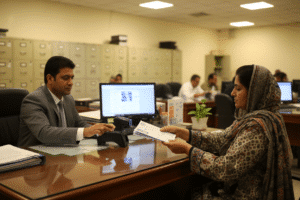
The BISP Check Balance Online by CNIC process for March 2026 is now fully accessible through the official 8171 web portal and SMS service. Beneficiaries of the Benazir Kafalat program can verify their Rs. 14,500 quarterly payment status in minutes, without visiting a BISP office.
The Benazir Income Support Programme (BISP) remains Pakistan's most far-reaching social protection initiative, serving millions of low-income households, widows, persons with disabilities, and women-headed families across the country. With the March 2026 installment now in distribution, knowing exactly how to verify your payment status online has become more practical than ever.
And for many beneficiaries, especially those in rural areas with limited mobility, the ability to check BISP balance online by CNIC number represents a real shift in how government support reaches people.
The 8171 portal is the official gateway for BISP balance verification
The Government of Pakistan operates the 8171 web portal as the primary digital platform for BISP payment verification. This portal is accessible from any smartphone or computer with an internet connection, and the process requires only your 13-digit CNIC number.
How to check your BISP balance online step by step
The verification procedure through the 8171 portal is straightforward:
- Open the official 8171 web portal in your browser
- Enter your 13-digit CNIC number in the designated field
- Complete the captcha verification
- Click "Submit"
- Your payment status will appear on screen immediately
The result will show whether your Benazir Kafalat payment for March 2026 has been released, is pending, or is currently under eligibility review. If you have already confirmed your status and want details on where to collect your funds, the complete guide to BISP March 2026 payment collection centers covers all available withdrawal points.
SMS verification for beneficiaries without internet access
Not every eligible household has reliable internet access. The SMS 8171 service addresses this directly. To use it:
- Open your phone's SMS application
- Type your 13-digit CNIC number as the message body
- Send it to 8171
- Wait for the automated response confirming your payment status
This method works on any basic mobile phone and is particularly valuable for beneficiaries in rural zones. Before using this service, it is worth checking the current 8171 SMS service charges for 2026 to understand any applicable fees from your mobile operator.
Both the web portal and the SMS number share the same identifier: 8171. Always use official channels to avoid scams or misinformation about your payment status.
The March 2026 Benazir Kafalat payment: what beneficiaries need to know
The Benazir Kafalat sub-program distributes payments on a quarterly basis. The March 2026 installment of Rs. 14,500 follows the distribution schedule announced in January 2026, with Phase 2 of the payment calendar published during the same month. A formal notice regarding BISP office hours was also published in February 2026, indicating active distribution activity across the country.
Payments are being distributed through a hybrid system that combines designated BISP campsites (used particularly in certain districts during January 2026), authorized retailer agents, designated banks, and ATMs. Beneficiaries must present their original CNIC and complete biometric verification at the point of collection. If you prefer using an ATM, the step-by-step ATM withdrawal guide for BISP 8171 payments explains the full process.
quarterly Benazir Kafalat payment for eligible beneficiaries in March 2026
What to do if your payment is not showing
A payment not appearing in the system does not automatically mean it has been denied. There are three common explanations: the payment has not yet been released for your district, the verification process is still ongoing, or your eligibility status is currently under review. In these cases, waiting a few days before rechecking is often sufficient. For a detailed breakdown of the most frequent causes behind missing payments, the five main reasons why BISP 8171 payments get delayed is a useful reference.
If the delay persists beyond a reasonable timeframe, visiting your nearest BISP office with your original CNIC is the recommended next step.
Eligibility criteria and what disqualifies a household
The BISP Dynamic Survey and the NSER (National Socio-Economic Registry) Survey together determine who qualifies for payments. Eligibility is not self-declared. It is calculated based on a poverty score derived from household data collected during these surveys.

To qualify, a household must meet the following conditions:
- Low household income consistent with the program's poverty threshold
- No government employment among household members
- No ownership of significant property or business assets
- A poverty score that meets BISP's internal benchmarks
- Active registration in the NSER database
Widows, persons with disabilities, and women heading households are among the priority groups explicitly targeted by the program. The Benazir Kafalat framework was designed with these demographics at its core.
How to register if you are not yet in the system
New applicants cannot self-register digitally at this stage. The process requires a physical visit to the nearest BISP registration center, where applicants must provide:
- Their original CNIC
- Family details (number of household members, ages)
- Income information
- Household data (assets, property, living conditions)
After submitting this information, applicants complete the BISP Dynamic Survey, which feeds into the NSER database. For a full walkthrough of the survey registration process, the BISP 8171 Dynamic Survey update and registration guide covers every step through the official bisp.gov.pk portal.
If your CNIC is not found in the system when you check online, it means your household is not yet registered in the BISP database. Visiting your local BISP registration center is the only way to initiate the enrollment process.
Troubleshooting common BISP verification problems
Several recurring issues affect beneficiaries trying to verify or collect their payments. Understanding them in advance prevents unnecessary delays.
CNIC not found in the portal: This result means the CNIC number entered is not associated with any registered BISP beneficiary. The solution is to visit the nearest BISP office and complete the full registration process, including the BISP Dynamic Survey.
Biometric verification failure at collection point: When fingerprints cannot be matched during withdrawal, the beneficiary must visit a NADRA office to update their biometric data. NADRA manages Pakistan's national identity database, and outdated fingerprint records are the most common cause of biometric failure. Once updated at NADRA, the beneficiary can return to the payment point. A dedicated guide on fixing BISP biometric verification issues explains the resolution steps in detail.
Payment showing as pending for an extended period: This can indicate that the payment has not yet been released for a specific geographic area, or that the beneficiary's eligibility is being re-evaluated. The BISP Dynamic Survey is updated regularly, and changes in household circumstances can trigger a review cycle. Rechecking after a few days and contacting the local BISP office if the issue persists are the standard steps.
Fraud and impersonation risks: The Government of Pakistan has increased surveillance around BISP payments due to documented fraud attempts. Beneficiaries should only use the official 8171 portal and the official 8171 SMS number. Any third-party claiming to verify BISP status through unofficial channels should be treated with extreme caution.
The consequences of sudden payment interruptions extend beyond administrative inconvenience. For households that depend on the Rs. 14,500 quarterly transfer as a primary or supplementary income source, any disruption directly affects their economic stability. Verifying payment status online through the 8171 portal before traveling to a collection point eliminates unnecessary trips and ensures beneficiaries arrive prepared with the correct documents. The combination of digital verification tools and a clear understanding of the collection process gives BISP's target population a more reliable path to receiving the support the program was designed to deliver.