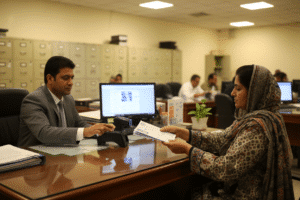
Can two family members use the same phone number for 8171 registration? The short answer is: technically possible, but strongly discouraged. The BISP system flags shared numbers, triggers additional verification, and can temporarily block further registrations tied to that contact. Each eligible family member should ideally register with a unique phone number linked to their individual CNIC.
Pakistan's Benazir Income Support Programme (BISP) reaches millions of low-income households across the country, and the 8171 registration portal sits at the heart of how those families access financial support. But as the system has grown more sophisticated heading into 2026, questions around shared phone numbers, household eligibility, and CNIC verification have become increasingly common, particularly in rural areas where a single mobile device often serves an entire household.
Understanding exactly how the system handles these situations can mean the difference between receiving quarterly payments on time and getting stuck in a verification loop that delays support for months.
What happens when two family members share a number for 8171 registration
The 8171 portal is designed to link each registration to a unique combination of a 13-digit CNIC and a contact phone number. When two members of the same household attempt to register using the same mobile number, the system does not automatically reject both applications, but it does not process them smoothly either.
How the system flags shared contact numbers
The BISP platform, which now benefits from tighter integration with NADRA records following the 2026 system upgrades, treats a phone number as a unique identifier alongside the CNIC. When the same number appears twice in the registration database, an automatic flag is raised. This triggers a secondary verification step before either application can advance.
Concrètement, the consequences unfold in three ways. First, SMS notifications intended for one applicant may reach the other person using the same device, creating genuine confusion about payment status and eligibility updates. Second, the system may initiate a temporary block on additional registrations tied to that number until a manual review is completed. Third, if the activity pattern looks irregular, the case can be escalated for a full manual verification, which significantly delays the processing timeline.
Rural households and the shared-phone challenge
This issue is particularly acute in rural zones, where smartphone or SIM card ownership is not universal. A single phone shared among siblings, a mother and daughter, or a husband and wife is a common practical reality. The BISP system, to its credit, does not treat this as outright fraud, but it does require those households to take extra steps to resolve the ambiguity.
The recommended path is straightforward: each applicant should visit a BISP registration centre and request that their individual record be updated with a distinct phone number. A BISP office can process a contact number update directly on the applicant's file, separating the two registrations and allowing both to proceed independently.
If two family members are registered under the same phone number and one of them receives a payment notification, the other may miss theirs entirely. Separating the records at a BISP office is the only reliable fix.
The 8171 registration process, step by step
For anyone navigating the BISP 8171 online registration for the first time, or re-registering after a rejection, the process follows a defined sequence. The official 8171 web portal is the primary access point, available from both mobile devices and desktop computers.
Steps to complete an 8171 registration
- Visit the 8171 portal through an official government URL
- Enter your 13-digit CNIC number accurately
- Complete the verification code displayed on screen
- Submit the information and wait for a status response
- If flagged as potentially eligible, attend a dynamic survey at a local BISP centre
The dynamic survey is the most detailed stage of the process. Government officials conduct an in-person assessment of the household, collecting data on family income, number of dependants, housing conditions, employment status, education levels, and even utility consumption. This data feeds directly into the eligibility scoring model that determines whether a household qualifies for the Benazir Kafalat Program and its quarterly disbursements of Rs. 13,500.
What triggers a rejection and how to respond
Incorrect CNIC information is the most common reason for an application to be rejected outright. Even a single digit entered incorrectly during the online submission will cause the system to return an error. But rejections also occur when the NADRA records do not match the details submitted, or when the household's profile does not meet the poverty threshold criteria.
When a rejection happens, the applicant should visit a BISP registration centre and request a reassessment. Completing the dynamic survey again with updated and accurate information is the standard corrective path. This is especially relevant for January 2026 re-registration cases, where thousands of families across various regions of Pakistan experienced delays due to payment processing issues that affected Phase 4 disbursements.
quarterly payment per eligible household under the Benazir Kafalat Program
Eligibility criteria for BISP 8171 in 2026
Not every Pakistani household qualifies for BISP support, and the eligibility framework is applied consistently across all applicants. Meeting these conditions is a prerequisite before the 8171 registration can result in approved status.

To be considered, an applicant must:
- Hold Pakistani citizenship with a valid, NADRA-verified CNIC
- Have a household income below the national poverty threshold
- Not be employed by any level of government
- Not own significant real estate or commercial assets
The NADRA integration improvements rolled out in 2026 have made eligibility verification faster and more accurate. Cross-referencing an applicant's CNIC against NADRA's national database now happens in near real-time through the portal, reducing the window for errors or fraudulent applications.
The BISP system in 2026 also covers related initiatives including the Benazir Taleemi Wazaif Program for educational support and the CM Maryam Nawaz Ration Card Registration. Eligibility for one program does not automatically guarantee access to the others.
How to check your BISP balance online by CNIC
Once registration is approved and payments begin, beneficiaries have three distinct methods to verify their balance and confirm whether funds have been credited to their account.
Three methods to check BISP payment status
Method 1: Web portal. Visit the 8171 online portal, enter the 13-digit CNIC, and the system displays the current payment status and balance information. This is the most detailed option and the one most useful for tracking Phase 4 payment updates.
Method 2: SMS. Send the 13-digit CNIC number as a text message to 8171. The system returns an automated reply with the current status. This method is particularly convenient for rural beneficiaries who may not have consistent internet access but do have basic SMS capability.
Method 3: In-person. Visit an authorised payment centre or bank. Staff can verify the account status directly and assist with any discrepancies. This is the recommended route when the online methods return unclear or conflicting information, which was a reported issue during the January 2026 payment delays that impacted thousands of low-income families.
For those managing their broader utility and financial obligations alongside BISP payments, tracking multiple accounts online has become a standard practice. Resources covering online bill verification tools are increasingly useful for households juggling various government service accounts simultaneously.
The 2026 system upgrades and what they mean for beneficiaries
The BISP 8171 infrastructure entered 2026 with a series of meaningful technical improvements. The enhanced integration with NADRA records means that identity verification now takes significantly less time than in previous years. The portal itself processes CNIC lookups more quickly, and the payment distribution system has been updated to reduce the kind of regional delays that caused frustration during the January 2026 Phase 4 rollout.
Faster verification and broader coverage
The March 2026 update to the system introduced streamlined workflows for applicants who had previously been stuck in manual review queues. Cases flagged for unusual activity, including those involving shared phone numbers, now move through the manual verification stage more efficiently. The goal, according to the programme's operational framework, is to extend reliable support to a larger base of low-income families without compromising the integrity checks that prevent duplicate or fraudulent claims.
The Benazir Taleemi Wazaif Program, which received its own updated guide in February 2026, operates on similar eligibility infrastructure. Families already enrolled in the Kafalat payment stream can access educational stipends for their children through the same BISP registration ecosystem, making the 8171 portal a genuinely multi-purpose entry point into Pakistan's social protection network.
But the shared-phone-number problem remains a friction point that the system has not fully automated away. Until every eligible applicant in rural Pakistan has access to a personal SIM card, the manual update process at BISP offices will continue to be a necessary workaround. Families navigating this situation should act early, separate their records before the next payment cycle, and keep their CNIC information current with NADRA to avoid any cascading verification issues that could affect multiple programmes at once.