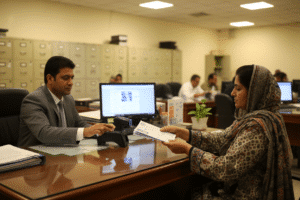
The PMT score (Poverty Means Test) is the single number that determines whether a Pakistani household qualifies for government welfare programs like BISP or Ehsaas Kafalat. In 2026, checking your PMT score by CNIC takes just minutes via SMS to 8171 or the official web portal. Knowing your score before each payment cycle can make the difference between receiving assistance and being left out.
Millions of families across Pakistan depend on social welfare payments to cover basic needs, yet many never verify their eligibility status until a payment fails to arrive. The Poverty Means Test score is the mechanism behind that eligibility decision, calculated from data held in the National Socio-Economic Registry (NSER) and cross-referenced with NADRA records. Understanding how it works, how to check it, and how to correct it when something goes wrong is practical knowledge every eligible household should have.
The system covers all major regions of the country: Punjab, Sindh, Khyber Pakhtunkhwa, Balochistan, Gilgit Baltistan, and Azad Kashmir. And with BISP ATM withdrawals having resumed in January 2026, the urgency of verifying your PMT score status has never been higher.
What the PMT score actually measures
The PMT score is not an arbitrary number. It is a composite assessment of a household's socioeconomic condition, derived from multiple data points collected during the NSER survey and verified against NADRA records. The Government of Pakistan uses this score to rank households by need and allocate welfare resources accordingly.
The factors that determine your score
Several variables feed into the final PMT calculation:
- Household income and employment status of all adult members
- Number of family members, particularly dependents
- Housing condition, including type of structure and ownership
- Education level of household members
- Asset ownership: land, vehicles, businesses, or residential property
- Access to utilities such as electricity, gas, and clean water
Each of these factors is weighted. A household with no formal income, poor housing, and multiple dependents will score lower, indicating greater need. A household that owns land or vehicles will score higher, signaling reduced eligibility. NADRA contributes critical data to this process: CNIC verification, family registration records, biometric authentication, and complete household member data are all integrated into the NSER database.
The PMT score eligibility ranges in 2026
| PMT Score Range | Household Category |
|---|---|
| 0–16 | Extremely poor, highest priority |
| 17–32 | Low-income, eligible for assistance |
| 33–40 | Vulnerable, under review |
| Above 40 | Generally not eligible |
Households scoring between 0 and 16 are classified as extremely poor and receive the highest priority. Those in the 17 to 32 range qualify for programs like the Ehsaas Kafalat Program and the BISP Kafalat stipend of Rs. 13,500. Scores between 33 and 40 place a household in a vulnerable review category, while anything above 40 typically disqualifies a household from receiving direct financial assistance. The same score system also governs eligibility for education stipends for children, emergency relief packages, health support programs, and women's financial assistance schemes.
How to check your PMT score by CNIC
There are two official methods for checking your PMT score in 2026: the 8171 web portal and the SMS service. Both are free. Both require only your 13-digit CNIC number (entered without spaces). Before checking, make sure you are using official channels. Fake websites and unauthorized agents are a documented risk.
Checking via the 8171 web portal
The web portal method provides a detailed eligibility status and is the preferred option for those with internet access. The process is straightforward:
- Open the official 8171 web portal
- Enter your 13-digit CNIC number without spaces
- Enter the captcha code displayed on screen
- Click Submit
- View your eligibility status on screen
The portal will return one of four possible results: Eligible, Under Verification, Not Eligible, or Data Not Found. If you receive "Under Verification," your household data is still being processed. "Data Not Found" usually means your CNIC has not been registered in the NSER database at all.
For those who also want to confirm their payment status separately, the BISP payment verification process for 2026 follows a similar portal-based approach.
Checking via SMS to 8171
The SMS method works without internet access and is available nationwide. Before sending your message, it is worth knowing that 8171 SMS service charges in 2026 are a common concern among users. The steps:
- Open your phone's SMS application
- Type your CNIC number without any spaces or dashes
- Send the message to 8171
- Wait for the automated reply
The reply will confirm your eligibility status using the same four categories as the web portal. Keep your CNIC number accurate. Incorrect digits will return wrong results or no results at all.
Both the 8171 web portal check and the NSER survey update are completely free of charge. Any individual or agent asking for payment to check or change your PMT score is engaged in fraudulent activity.
Who should check their PMT score right now
Not every household needs to verify their PMT score at the same time, but certain situations make an immediate check necessary. If any of the following applies to your household, checking before the next payment cycle is the right move.
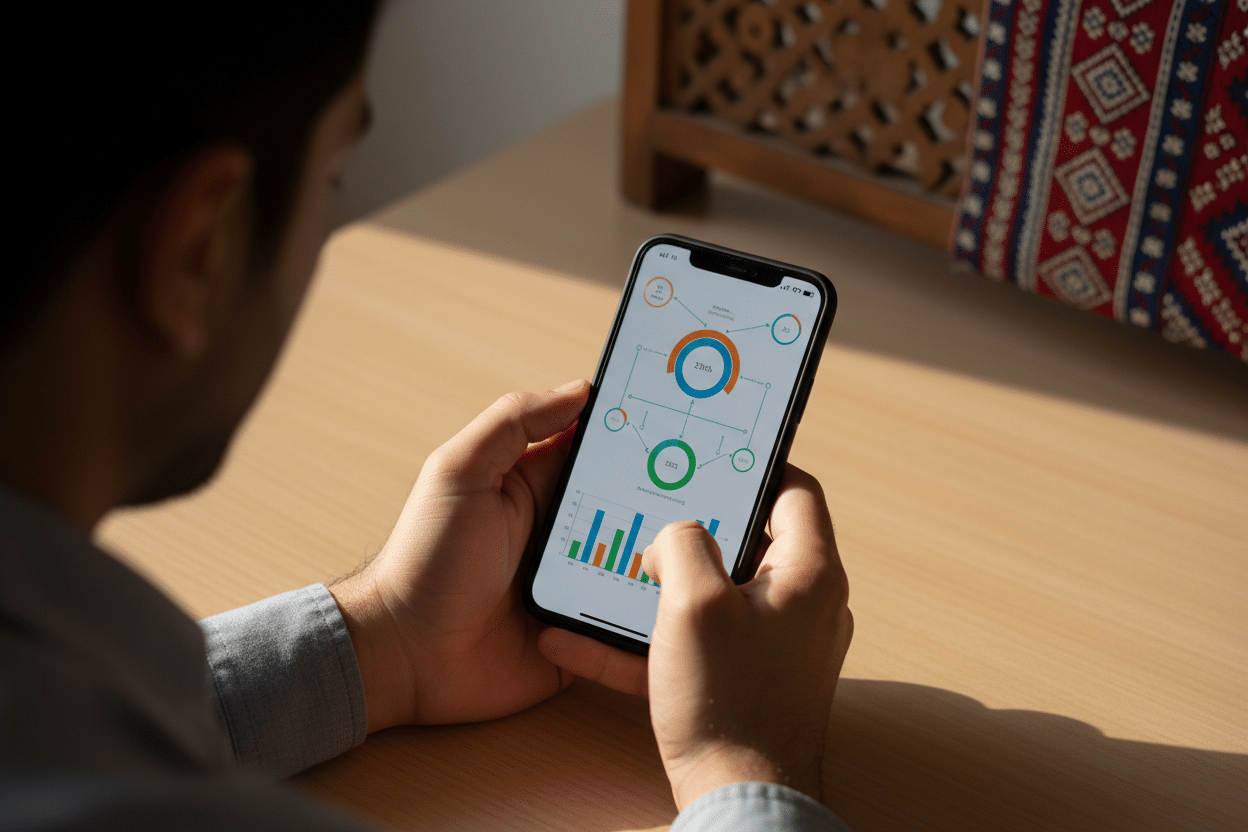
You should check your PMT score if you have applied for BISP payments and have not yet received confirmation. If you want to join the Ehsaas program but have not enrolled. If a previous application was rejected without explanation. If your household income has changed significantly, either up or down. If your family size has increased through births, marriages, or new dependents. And if your NSER survey data has not been updated for several years, because outdated records directly produce incorrect scores.
The Government of Pakistan recommends checking your PMT score before every new payment cycle. This is especially relevant now that BISP ATM withdrawals resumed in January 2026 and the BISP 8171 January 2026 Verification initiative is actively ongoing. If you have been wondering why your payment has not arrived, checking your PMT score should be the first step. You can also review common reasons why BISP payments are delayed to identify other potential issues.
BISP Kafalat stipend for eligible households in 2026
How to update your NSER data and correct your PMT score
An incorrect PMT score is not permanent. If your score does not reflect your household's actual situation, you can request an update through the Dynamic NSER Survey. This process requires a visit to your nearest BISP Tehsil Office and cannot be completed online.
The NSER survey update process
Bring your original CNIC to the office. The process involves five steps:
- Visit your nearest BISP Tehsil Office
- Present your original CNIC
- Provide accurate details for all household members
- Share correct income and employment information
- Complete biometric verification
Biometric verification is mandatory. If it fails, your score may remain incorrect. Similarly, if any family members are missing from the records, the calculated score will not accurately reflect your household's actual size and need. Migration to a new area without updating your data is another common cause of score errors.
What causes an incorrect PMT score
Several specific situations lead to a score that does not match reality. Outdated NSER data is the most common cause, particularly for households that have not been surveyed in several years. Missing family members in the registry means the household size is undercounted, which affects the score calculation directly. Biometric verification failure during a previous survey can leave records incomplete. And households that have moved to a new region without notifying the system will carry data tied to their old address and circumstances.
For households in Punjab specifically, the PSER Punjab online registration process is a parallel system worth understanding, as it interacts with the broader NSER framework. If you have recently completed a BISP 8171 dynamic survey update, allow time for the new data to be processed before rechecking your score.
Avoiding fraud and protecting your CNIC data
The PMT score check system is frequently targeted by scammers who exploit low-income households. The risks are real and documented by the Government of Pakistan, which has issued specific warnings.
Never share your CNIC number with unknown agents or third parties. Never pay anyone claiming they can change your PMT score. Visiting fake websites or unofficial portals puts your personal data at risk. All legitimate PMT score services are free.
Sharing your CNIC with unknown agents is a direct security risk. Your CNIC number is linked to your NADRA records, family registration data, and biometric profile. Handing it to an unauthorized party can expose your household to identity-related fraud. Paying agents to change your PMT score is not only ineffective but constitutes fraudulent activity that could disqualify your household entirely.
Fake websites that mimic the official 8171 portal are another threat. Always verify that you are using the correct government domain before entering any personal information. The official BISP system, the 8171 portal, and all associated NSER survey services are completely free. No legitimate government process requires a fee to check or update your eligibility status.
The PMT score system, when used correctly and through official channels, is a transparent and accessible tool. Households that keep their NSER data current, check their eligibility status before each payment cycle, and report discrepancies through the proper BISP Tehsil Office channels are the ones most likely to receive the assistance they are entitled to. The score is not fixed, and for millions of families across Pakistan's six provinces, knowing how to navigate it in 2026 is a matter of direct financial consequence.