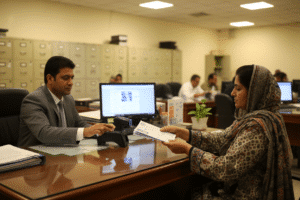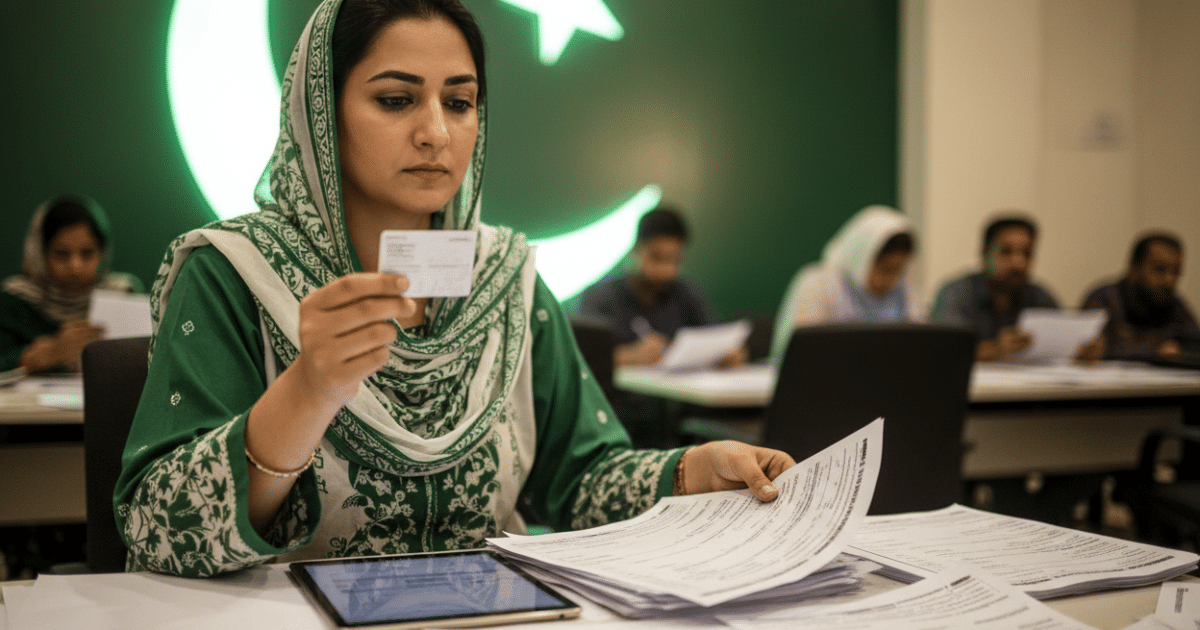
8171 registration without a mobile SIM is fully possible in Pakistan. Eligible households can complete the process in person at any official BISP center by presenting their CNIC and filling out the Dynamic Survey. No phone number is required to enroll, though online status checks remain available for those with internet access.
Pakistan's Benazir Income Support Programme (BISP) has long been one of the country's most significant social safety nets, delivering financial assistance to low-income families across every district. The 8171 system sits at the heart of this program, handling eligibility verification and payment tracking for millions of beneficiaries. But a persistent question keeps surfacing: what happens when an applicant doesn't own a mobile SIM?
The answer is more straightforward than most people expect. The registration process was designed with accessibility in mind, and the absence of a phone number does not disqualify anyone from applying.
8171 registration without a SIM is officially supported
The BISP 8171 platform operates on two parallel tracks. The first is digital, through the official 8171 web portal where applicants can check eligibility by entering their CNIC number, completing a captcha verification, and submitting the form. The second track is entirely offline, conducted at physical BISP registration centers spread across the majority of Pakistan's districts.
For applicants without a SIM, the offline track is the correct path. The entire enrollment procedure relies on identity verification through NADRA (National Database and Registration Authority) rather than mobile confirmation. This means a valid Computerized National Identity Card is the only non-negotiable document. Phone ownership is useful for receiving SMS notifications, but it is never listed as a prerequisite for registration.
Applicants without a mobile SIM will not receive SMS payment alerts. To stay updated on disbursement schedules, they should check their status directly at a BISP center or through the 8171 web portal using any internet-connected device.
What the Dynamic Survey actually covers
The NSER Dynamic Survey (National Socio-Economic Registry) is the core data-collection mechanism for BISP enrollment. When a household visits a registration center, a BISP staff member records detailed information across several categories: household income, number of family members, employment status of all adults, and physical living conditions such as housing type and access to utilities.
This survey is not a formality. The data collected directly feeds into the eligibility scoring system. Incomplete or inaccurate answers are among the most common reasons applications get rejected, alongside issues like incorrect CNIC details, household income exceeding the program threshold, or the presence of a government employee within the family unit.
Step-by-step process at a BISP center
Completing the BISP 8171 registration without a SIM involves five clear steps:
- Visit the nearest BISP registration center with a valid CNIC
- Request and complete the Dynamic Survey (covering income, household members, employment, and housing)
- Submit the form for CNIC verification against the NADRA database
- Wait for the eligibility assessment to be processed
- Return to check status in person, or use the 8171 portal from any device
The processing timeline after survey submission is not publicly specified by BISP, but applicants are encouraged to follow up regularly.
Checking eligibility and payment status on the 8171 portal
Once registration is complete, the 8171 online portal allows anyone to verify their eligibility status without needing a SIM card, as long as they have access to a computer or smartphone connected to the internet. The process takes under two minutes.
To check eligibility, the applicant visits the official portal, enters their 13-digit CNIC number, completes the captcha security check, and clicks submit. The result displays immediately, showing whether the household qualifies for the Benazir Kafalat program.
Payment verification follows the same sequence. After entering the CNIC, the portal displays available payment details. For January 2026, disbursements under the program include amounts of Rs. 13,500 for standard beneficiaries and Rs. 14,500 under the updated Qist Ehsaas 2026 framework, which corresponds to Phase 4 payments. If funds are confirmed as available, the applicant can collect them at the nearest BISP payment center, a partner bank branch, or through a registered retail payment agent.
maximum quarterly payment under the 2026 Qist Ehsaas disbursement
Where to collect payments without a SIM
The absence of a mobile SIM does not affect payment collection in any way. BISP payment centers, partner bank branches, and authorized retail payment agents all accept beneficiaries who simply present their CNIC. The payment system is identity-based, not phone-based.
But one warning applies here: unauthorized agents operate in some areas and charge fees for services that are entirely free through official channels. Using them creates financial risk and potential data security issues. All legitimate BISP services, from registration to payment collection, are provided at no cost.
Why applications get rejected and how to fix them
Rejection after submitting a BISP 8171 application is more common than it should be, and most cases trace back to preventable errors. The four main causes are:
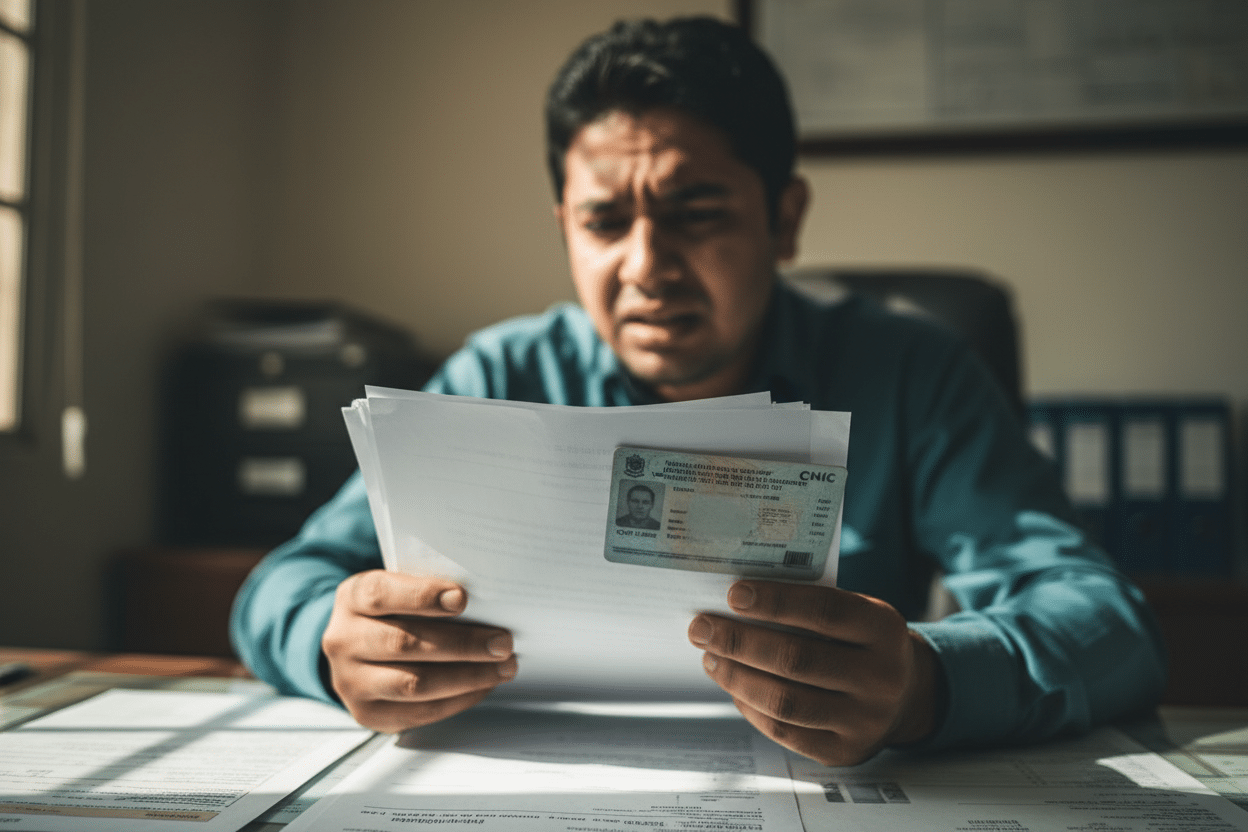
- Incorrect or mismatched CNIC information in the application
- Household income above the program's eligibility threshold
- A government employee registered within the family unit
- An incomplete or partially filled Dynamic Survey
If an application is rejected, the process for correction runs through the same BISP offices used for initial registration. The applicant returns, requests a new Dynamic Survey session, and updates the relevant information. NADRA records should also be reviewed if family composition has changed, since discrepancies between BISP data and NADRA records can trigger automatic rejections.
Never use unofficial agents or third parties to submit or correct a BISP application. Unauthorized intermediaries cannot improve your chances of approval and may expose your personal CNIC data to misuse.
The BISP 8171 Online Registration 2026 update reinforces this guidance. The government has made the portal more accessible, with the January 2026 refresh improving how eligibility results are displayed, but the underlying requirement remains unchanged: accurate data submitted through official channels is the only path to a valid enrollment.
Documents and eligibility requirements for the 2026 process
The documentation required for BISP registration is intentionally minimal. Applicants need three categories of information ready when visiting a center:
- A valid CNIC issued by NADRA
- Family details, including names and relationship of all household members
- Household information, covering income sources, employment status, and living conditions
No additional documents such as utility bills, property records, or income certificates are listed as mandatory. The Dynamic Survey itself captures most of what the program needs. This simplicity is deliberate, given that many target beneficiaries live in rural or semi-urban areas where formal documentation is limited.
Eligibility for the Benazir Kafalat component focuses on low household income, female-headed households or households with a female primary recipient, and families not connected to government employment. The program's stated goals include providing financial stability to vulnerable women and families, reducing economic hardship, and maintaining a transparent verification mechanism through the 8171 system.
For households that do have internet access, regularly checking the 8171 portal remains the fastest way to stay informed about payment schedules and eligibility status. And for anyone navigating government service portals in Pakistan more broadly, resources like online bill verification tools follow a similar logic of centralized, CNIC-based access that removes the need for physical paperwork at every step.
The bottom line on SIM-free registration is straightforward: the 8171 registration process was built around identity verification, not mobile connectivity. Any Pakistani household meeting the income and eligibility criteria can apply, regardless of whether anyone in the family owns a phone.