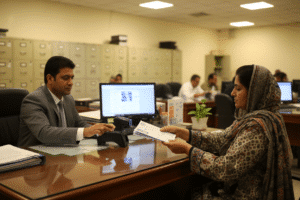
The KPK Government has officially announced the KP Ramazan Relief Package 2026, offering Rs 12,500 in direct cash assistance to eligible low-income families across Khyber Pakhtunkhwa during Ramadan. The program uses a digital CNIC-based verification system and is entirely free to apply for.
Ramadan places extra financial pressure on households already stretched thin. For families in Khyber Pakhtunkhwa living on daily wages or with no steady income, the timing of this announcement carries real weight. The KPK Government has moved to ease that burden with a structured, digitally managed relief program that puts cash directly into the hands of those who need it most.
The package is not a symbolic gesture. At Rs 12,500 per eligible family, it represents meaningful support for widows, persons with disabilities, daily wage earners, and households registered in social protection databases. And unlike many government programs that get bogged down in paperwork and middlemen, this one is built around transparency from the ground up.
KP Ramazan Relief Package 2026 eligibility and who qualifies
The KP Ramazan Relief Package targets a specific population: families with low household incomes who are already part of the social welfare ecosystem in the province. That means daily wage workers, widows, and persons with disabilities are at the front of the line. Families already enrolled in social protection databases have a clear advantage, as their information is already on record with provincial authorities.
But eligibility is not automatic just because a family is poor. The program applies defined exclusion criteria that can result in rejection even for genuinely needy households.
Reasons an application can be rejected
Several conditions will disqualify an applicant. If the household income exceeds the defined ceiling, the application will not be approved. The same applies if any family member is a government employee drawing a high salary. Ownership of multiple vehicles or high-value assets is another disqualifying factor, as is having incomplete or outdated household data in official registries.
That last point matters more than it might seem. Families whose records are not up to date in the provincial databases can miss out entirely, not because they are ineligible in principle, but because the system cannot verify their status. Updating those records before applying can make a concrete difference in the outcome.
The KP Ramazan Relief Package is completely free. Never pay anyone claiming to charge a registration fee — this is a scam. Follow only official government channels.
How to apply and verify eligibility for the Ramazan cash assistance
The application process is designed to be accessible, even for people without advanced digital skills. The provincial government has set up an online verification portal where applicants can check their status using their CNIC number (exactly 13 digits). The process does not require physical visits to an office to get started.
Step-by-step verification process
The steps are straightforward:
- Open the official government verification portal or use the SMS verification service.
- Enter the 13-digit CNIC number in the designated field.
- Complete the verification process as prompted.
- Submit the required information.
- Wait for a confirmation message indicating eligibility status.
For those who prefer offline verification or want to cross-check their status, the SMS route is available. The provincial verification system operates separately from federal programs like the PM Ramazan Relief Package (which uses code 9999 and offers Rs 13,000) or the Punjab Nigahban Program (code 8070, Rs 10,000). For BISP-related queries, the 8171 verification system remains the standard federal channel. The KPK program uses its own provincial verification infrastructure.
Collecting the payment
Once eligibility is confirmed, beneficiaries collect their payment through one of several available channels. Bank transfers are the primary route, but JazzCash and Easypaisa mobile wallets are also supported, which is significant given that many rural households in KPK do not have traditional bank accounts. Authorized payment centers and government distribution points are also available for in-person collection.
At the time of collection, the applicant must bring their original CNIC for identity verification. No exceptions are made on this requirement.
direct cash assistance per eligible family under the KP Ramazan Relief Package 2026
How this package compares to other federal relief programs in Pakistan
The KP Ramazan Relief Package 2026 sits within a broader landscape of government cash transfer programs active in March 2026. Understanding where it fits helps applicants know which programs they may qualify for simultaneously and which verification channels to use for each.

The federal PM Ramazan Relief Package offers a slightly higher amount at Rs 13,000, accessible via SMS code 9999. For families in Punjab, the Nigahban Program provides Rs 10,000 through the 8070 SMS code. At the national level, BISP continues to operate its own disbursement framework, and many families already receiving BISP support may also qualify for provincial top-ups like the KPK package.
Families already enrolled in the Ehsaas Rashan Program or similar food subsidy schemes should check whether their registration data is consistent across systems, as discrepancies between databases are one of the more common reasons for rejection. Similarly, those who have previously applied through the 8123 web portal for food assistance should verify that their CNIC details match across both federal and provincial records.
Eligible families in KPK can receive Rs 12,500 through bank transfer, JazzCash, or Easypaisa. Verification requires a 13-digit CNIC. The program is free, and no intermediary is needed to apply.
Digital inclusion and transparency at the core of the KPK program
One of the more significant aspects of the KP Ramazan cash assistance program is what it signals about how the provincial government is approaching social protection. The shift to CNIC-based digital verification reduces the role of intermediaries who have historically extracted informal fees from beneficiaries. By routing payments through mobile wallets like JazzCash and Easypaisa, the program also brings unbanked households into the formal financial system, at least partially.
For anyone wondering whether they can check payment status without internet access, the SMS verification option built into programs like this one remains a practical alternative in areas with limited connectivity. The KPK government's use of SMS channels alongside its online portal reflects an awareness that digital access is uneven across the province, particularly in rural and mountainous districts.
Transparency is built into the architecture of the program in another way too. Because payments go directly to the beneficiary's CNIC-linked account or mobile wallet, the paper trail is clear and auditable. That does not eliminate all fraud risk, but it significantly reduces the opportunities for diversion that plagued older cash distribution models.
The broader implication is that the Ramazan financial relief program in KPK is not just about getting money to families this month. It is part of a longer effort to build a provincial social protection infrastructure that is faster, cleaner, and harder to game. For the families receiving Rs 12,500 this Ramadan, the immediate impact is what matters most. But the method of delivery is as important as the amount itself.