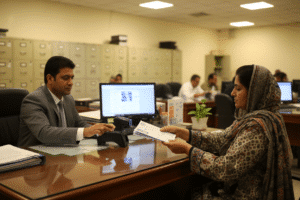
BISP online registration in 2026 has shifted to a new digital method that directly determines eligibility for the March 2026 payment. Families must complete the Dynamic Survey and verify their status through the 8171 web portal to avoid missing their quarterly installment under the Benazir Kafalat programme.
The Benazir Income Support Programme (BISP) has quietly transformed how millions of Pakistani families access social protection payments. What once required hours in crowded offices now begins with a few steps on a mobile screen. But the shift is not just cosmetic — the new online registration system introduced in 2026 changes the entire eligibility pipeline, and families who miss key steps risk losing their March 2026 payment entirely.
The stakes are real. With Phase 3 of BISP 8171 payments launched in January 2026 distributing Rs. 13,500 per eligible household, and a Taleemi Wazaif double payment reported in February 2026, the programme is moving faster and at greater scale than ever. Getting registered correctly is no longer optional — it is the gateway to receiving anything at all.
The 8171 portal is the starting point for every new registration
The 8171 web portal is the official digital entry point for BISP registration verification in 2026. Whether accessed from a smartphone or a desktop computer, the process is the same and designed to be straightforward even for first-time users.
The eligibility check follows four steps:
- Open the 8171 web portal on any browser
- Enter your CNIC number in the designated field
- Type in the verification code displayed on screen
- Click the "check eligibility" button to view your status
If the result shows eligibility, the next step is not digital — it requires a physical visit to complete the Dynamic Survey. If the result is unclear or shows no record, it often means the CNIC is not yet registered in the NSER (National Socio-Economic Registry) Dynamic Survey database, which is the foundational data layer behind all BISP decisions.
For families already registered and waiting on their quarterly disbursement, the BISP 8171 payment verification process for March follows a similar portal-based logic and can confirm whether a payment has been processed.
Why the BISP PMT Score controls your eligibility
Behind every eligibility decision sits the BISP PMT Score, a poverty measurement tool that calculates household vulnerability based on income, assets, family composition, and employment status. Families with a score within the required range are included in the programme. Those above the threshold — even by a small margin — are excluded.
The score is not fixed. It updates when families complete a new NSER Dynamic Survey, which is precisely why the survey matters so much for 2026 registrations. A family whose circumstances have worsened since their last survey may now qualify, but only if their updated data has been submitted and verified by NADRA.
The Dynamic Survey is the step most families miss
Checking eligibility online is only the first part of the process. The Dynamic Survey is where actual registration happens, and skipping it is the most common reason new applicants fail to receive payments.
How to complete the Dynamic Survey at a Tehsil BISP office
The survey must be completed in person at the nearest Tehsil BISP office. The process requires:
- Bringing the original CNIC — no photocopies accepted
- Providing accurate information about all household members
- Submitting that data to the BISP representative on site
- Waiting for system verification, which may take several days
- Receiving a confirmation message from 8171 confirming eligibility status
The quality of the information submitted directly affects the outcome. Incorrect household data, outdated addresses, or discrepancies with NADRA records create delays. In some cases, they trigger an outright rejection. Families who receive a rejection notice are advised to visit their nearest BISP office and request a Dynamic Survey update rather than resubmitting from scratch.
A detailed breakdown of how the dynamic survey feeds into the broader registration system is available in this guide to completing BISP 8171 Dynamic Survey registration.
What triggers a registration block
Four specific issues consistently cause registration failures in the 2026 BISP online system:
- CNIC not found in the NSER database, usually because the household was never surveyed
- Incomplete Dynamic Survey, where data was started but never fully submitted
- Pending NADRA verification, which creates a processing delay of days or weeks
- Incorrect household information, which causes a mismatch with official identity records
Each of these has a resolution path, but all of them require a visit to a BISP office rather than an online fix. The digital portal confirms status — it does not correct errors.
If your CNIC does not appear in the 8171 system, do not attempt to re-register multiple times online. Visit your nearest BISP Tehsil office directly with your original CNIC to resolve the issue at the database level.
Eligibility criteria for the March 2026 payment
Not every low-income household qualifies automatically. The BISP 2026 eligibility framework applies a specific set of conditions, and all must be met simultaneously.
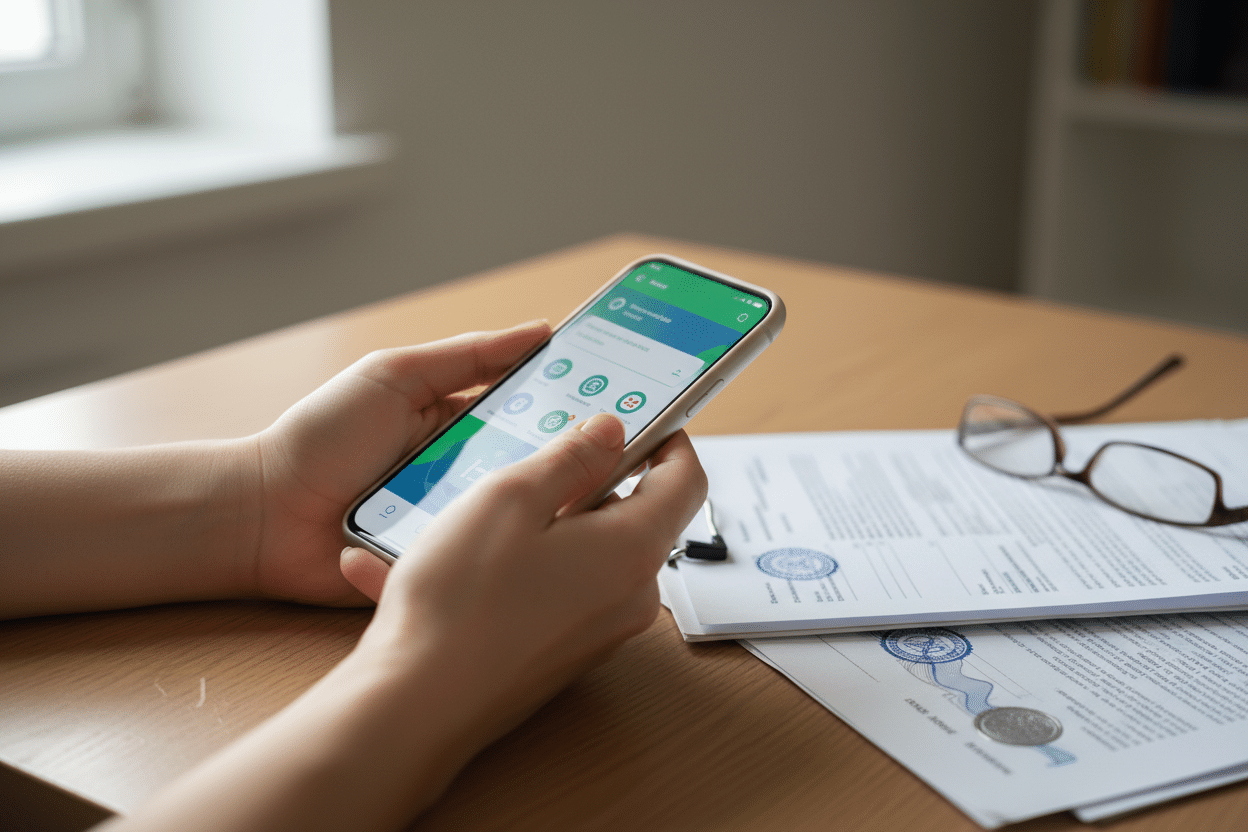
Priority beneficiaries are female heads of household — women who manage the family unit and meet the income threshold. This has been a consistent feature of the Benazir Kafalat programme since its inception, and it remains central to the 2026 payment cycle.
Beyond gender-based priority, the core criteria are:
- Household falls within a low-income category as defined by the PMT scoring system
- No member of the household holds a government employment position
- Monthly household income stays within the programme's defined limit
- The household is registered in the NSER Dynamic Survey with current, accurate data
Families that meet these conditions and have a confirmed eligible status on the 8171 portal are included in the March 2026 quarterly payment cycle under Benazir Kafalat. Children in eligible households may also qualify for Benazir Taleemi Wazaif, the programme's education assistance component, which distributed a double payment in February 2026.
free SIM cards distributed to BISP beneficiaries to support digital payment access
How payments reach beneficiaries after registration
Once registration is confirmed and eligibility is verified, the March 2026 BISP payment reaches families through multiple channels. The programme has expanded its distribution infrastructure significantly, and the Social Protection Wallet initiative is part of a broader push toward fully digital disbursement.
Payment collection points and digital options
Beneficiaries can collect their quarterly payment through:
- BISP payment centres with original CNIC for biometric verification
- Banking partners connected to the programme's disbursement system
- ATMs, for families with a linked payment card
- Retail payment agents, which function as local cash-out points
The distribution of 2.4 million free SIM cards to BISP beneficiaries is directly tied to this digital expansion. Mobile-based payments reduce dependency on physical collection centres and cut the queues that have historically made payment days difficult for rural families. For those using ATM withdrawal, a step-by-step walkthrough is available covering the BISP 8171 ATM payment process.
What to do if a payment has not arrived
Delayed or missing payments under the March 2026 cycle are not automatically corrected. Beneficiaries who have confirmed eligibility but have not received their installment should first re-verify their status on the 8171 portal. If the portal shows payment processed but funds have not been received, a visit to the nearest BISP office with the original CNIC is the correct next step.
The Phase 3 payment cycle launched in January 2026 was specifically designed to address missed or delayed payments from previous quarters, distributing Rs. 13,500 to affected households. Families who believe they were wrongly excluded from earlier cycles should raise the issue during their Dynamic Survey update visit.
It is also worth noting that Punjab province residents have access to the Ramzan 8070 package — a separate government initiative running alongside BISP that provides additional seasonal support. The two programmes operate independently, and eligibility for one does not automatically determine eligibility for the other. Families in Punjab can check their status for the 8070 Ramzan package through a different channel entirely.
The complete path to receiving the March 2026 BISP payment runs through three steps: verify eligibility on the 8171 portal, complete the Dynamic Survey at a Tehsil BISP office, then collect payment with your original CNIC at any authorised distribution point.
Beyond the March 2026 payment, the 2026 BISP online registration system represents a structural change in how Pakistan manages social protection at scale. The combination of the NSER database, NADRA verification, digital disbursement through the Social Protection Wallet, and the 8171 portal creates a unified system where eligibility, registration, and payment all connect through a single data backbone. Families who engage with that system correctly — completing the survey, keeping household data current, and verifying status before each payment cycle — are positioned to receive consistent support. Those who do not risk being invisible to a system that cannot pay what it cannot find.