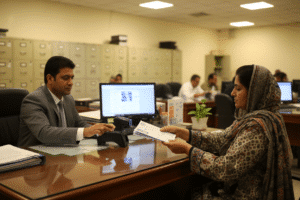
The PSER Punjab Gov PK Online Registration 2026 is now open for households across Punjab, Pakistan. This free government portal collects socio-economic data to determine eligibility for welfare programs including food rations, Ramzan relief packages, and financial subsidies. Completing your registration as early as possible is the only way to secure a place in the provincial welfare database before new assistance programs launch.
The Punjab Socio-Economic Registry, commonly known as PSER, represents a major shift in how the provincial government identifies and supports vulnerable families. Rather than relying on outdated lists or manual surveys, the Punjab government has built a continuous digital registry that stays active and updatable year-round. For millions of households, getting registered is no longer optional if they want access to the financial safety nets the province offers.
And the stakes are real. Families not included in the PSER database risk being excluded from upcoming subsidy rounds, seasonal packages, and targeted assistance programs, regardless of how genuinely they need support.
PSER registration is the gateway to Punjab welfare programs
The Punjab Socio-Economic Registry functions as the foundational database behind virtually every major welfare initiative in the province. When the government designs a food ration drive, a seasonal relief package, or a utility subsidy, it draws directly from PSER records to identify eligible households. This makes registration not just an administrative step, but a practical financial decision for low-income families.
The registry is linked to programs like the Punjab Nigehban Card Program, which distributes Rs. 10,000 to qualifying households, and to Ramzan-period support packages that have historically provided food and cash assistance. If you've been following the Rs. 10,000 Punjab Government Ramzan Package, you already know how time-sensitive eligibility windows can be. Families registered in PSER get priority access when these programs activate.
What the registry actually records
The PSER form collects a comprehensive snapshot of a household's living situation. Specifically, the system requires:
- CNIC number of the household head
- CNIC copies of all adult family members
- Family size and composition
- Monthly income level and employment status
- Children's education levels
- Housing conditions and access to basic utilities
- A registered mobile phone number linked to the applicant's own CNIC
This data profile allows government agencies to segment populations accurately and direct resources where they are most needed, reducing both fraud and the duplication of benefits that has historically undermined welfare delivery in Pakistan.
The SMS code 9999 and what it means for verification
The PSER system references SMS code 9999 as part of its notification and confirmation infrastructure. Once a registration is submitted, applicants may receive status updates or confirmation messages through this channel. But caution is warranted: only rely on official government announcements for any SMS-based instructions. If you've dealt with similar verification steps through other programs, the step-by-step guide for 9999 online CNIC verification explains how these systems typically operate and what to expect.
PSER registration is completely free. Never pay an agent, middleman, or any third party to complete your registration. Unofficial agents cannot speed up the process or guarantee eligibility.
Step-by-step process to complete PSER online registration 2026
The PSER Punjab Gov PK online registration process is designed to be completed independently, without any intermediary. Before starting, gather all required documents: your CNIC, CNICs of adult household members, and a mobile phone number registered in your own name. The entire process can be done on a smartphone or computer with an updated browser.
Here are the 7 official steps:
- Visit the official PSER portal at pser.punjab.gov.pk using an updated browser
- Create an account using your CNIC number and your registered mobile number
- Receive and enter the confirmation code sent to your mobile to validate the account
- Access the registration form through your newly created PSER login
- Enter personal data: full name, CNIC number, residential address, and contact information
- Enter household information: number of family members, income level, employment status, children's education, and housing conditions
- Submit the form and immediately save or screenshot your reference number for future status checks
Verifying your registration status after submission
Once submitted, you can return to the PSER portal login at any time to check your submission status, confirm your file has been received, and monitor any program-related updates attached to your household record. This is the only reliable way to track your application. Third-party verification services or agents claiming to check your status on your behalf are not authorized and should be avoided entirely.
Always save your PSER reference number after submission. This number is your only proof of registration and will be needed for any status inquiry or program enrollment verification.
Common mistakes that delay or invalidate PSER registration
The most frequent reason households lose access to welfare programs is not ineligibility. It is errors in the registration form that trigger delays or outright rejection from the database. Understanding where applicants go wrong helps avoid those exact pitfalls.
The five most common errors in PSER registration are:
- Entering an incorrect CNIC number (even a single digit error causes verification failure)
- Providing inaccurate income figures that don't match other government records
- Using a mobile number not registered under your own name (the system cross-checks SIM ownership)
- Submitting the form without reviewing all data one final time
- Paying a third-party agent and allowing them to enter data on your behalf, often leading to errors or fraud
The mobile number issue is particularly consequential. The PSER system, like other government platforms including the 8171 registration framework, requires that the number you use be formally linked to your CNIC. If you've encountered similar issues with other welfare portals, the explanation of why two family members cannot use the same number for 8171 registration illustrates why this policy exists across Punjab and federal programs alike.
official cost of PSER Punjab online registration — any payment demanded is a scam
What happens after successful PSER Punjab registration
Getting into the PSER database is not the end of the process. It is the beginning of a household's formal relationship with Punjab's welfare infrastructure. Once registered, families become eligible for consideration under every program that draws from the registry, and the range of those programs is significant.
The Punjab Nigehban Card distributes Rs. 10,000 to qualifying registered households. Ramzan-period packages, which provide targeted food and cash relief during the holy month, are allocated on a priority basis to families already in the PSER system. The registry also feeds into broader subsidy schemes covering utilities and essential goods. For context on how similar Ramzan-linked financial assistance works, the Ramzan Nigehban Card PIN code and activation guide provides a practical walkthrough of the disbursement side.
Temporary employment linked to PSER field surveys
Beyond household registration, the PSER expansion also creates short-term employment. The Punjab government periodically recruits temporary field staff to conduct in-person surveys and assist with data entry in areas where digital access is limited. These positions are advertised exclusively through official government portals and recognized newspapers. Anyone claiming to offer PSER field jobs through WhatsApp groups, social media pages, or informal channels should be treated with skepticism.
The broader impact on Punjab's welfare targeting
The registry's continuous nature, with no fixed closing date, means the Punjab government can update its database as household circumstances change. A family that improves its income may eventually become ineligible, while one that falls into hardship can register and enter the system quickly. This dynamic approach is meant to make welfare delivery more accurate over time, reducing the chronic problem of benefits reaching households that no longer need them while genuinely vulnerable families remain invisible to the system.
The PSER registration form 8171 check online reference, which circulates widely in search queries, reflects the public's familiarity with the 8171 code used across Pakistan's digital welfare ecosystem. Both the federal BISP system and the Punjab PSER registry rely on CNIC-based verification as their core identity layer. If your CNIC data is inconsistent across platforms, delays become almost inevitable. Keeping your national identity information accurate and up to date across all government systems is the most effective way to ensure smooth registration and timely access to the financial support Punjab's welfare programs are designed to provide.