The Ramzan Nigehban Card PIN code is a four-digit security code that unlocks access to approximately PKR 10,000 in Ramadan relief funds for low-income families across Punjab, Pakistan. Issued under the Ramzan Nigehban Relief Program 2026 by the Government of Punjab, the card operates like a standard ATM card and requires a verified PIN to process any withdrawal or payment.
The program, championed by Chief Minister Maryam Nawaz, targets households registered in the social protection database. It replaces manual cash handouts with a Nigehban Digital Relief Card system designed to reduce queues, eliminate middlemen, and put money directly in the hands of families who need it most during Ramadan 2026.
And for many beneficiaries, the single biggest hurdle is not eligibility — it is simply knowing how to activate and use the card correctly.
The Ramzan Nigehban Relief Program 2026 explained
The Ramzan Nigehban Relief Program is a Punjab government initiative that distributes financial assistance to low-income families during the holy month of Ramadan. The Bank of Punjab serves as the primary banking partner, handling card issuance, ATM infrastructure, and branch-level support for beneficiaries.
The assistance amount sits at around Rs. 9,999 to PKR 10,000, credited directly to the Nigehban Relief Card. Beneficiaries can spend these funds at registered utility stores, partner shops participating in the program, or withdraw cash at any partner bank ATM. The goal is straightforward: allow families to purchase essential food items like flour, sugar, and cooking oil during Ramadan without standing in long distribution lines.
Who qualifies for the Nigehban Digital Relief Card
Eligibility is tied to three core conditions. First, the household income must fall below the program's threshold. Second, the applicant must hold a valid and registered CNIC (Computerized National Identity Card). Third, the family must already be enrolled in the social protection database.
Applications get rejected for specific reasons. A household income exceeding the eligibility ceiling disqualifies the family. Incomplete CNIC information also triggers automatic rejection. And families already receiving major government benefits from other programs face exclusion from this particular relief stream. If you are unsure about your status, a quick CNIC verification check can clarify your standing before you visit a distribution center.
Families already enrolled in major government schemes may be excluded from the Ramzan Nigehban Relief Program. Always verify your eligibility status using your CNIC before collecting your card.
How to activate your Nigehban Card PIN code at an ATM
The PIN activation process is straightforward, but every step matters. Missing one can lock the card and force a branch visit to reset it. Here is the exact sequence to follow after receiving your Nigehban Relief Card.
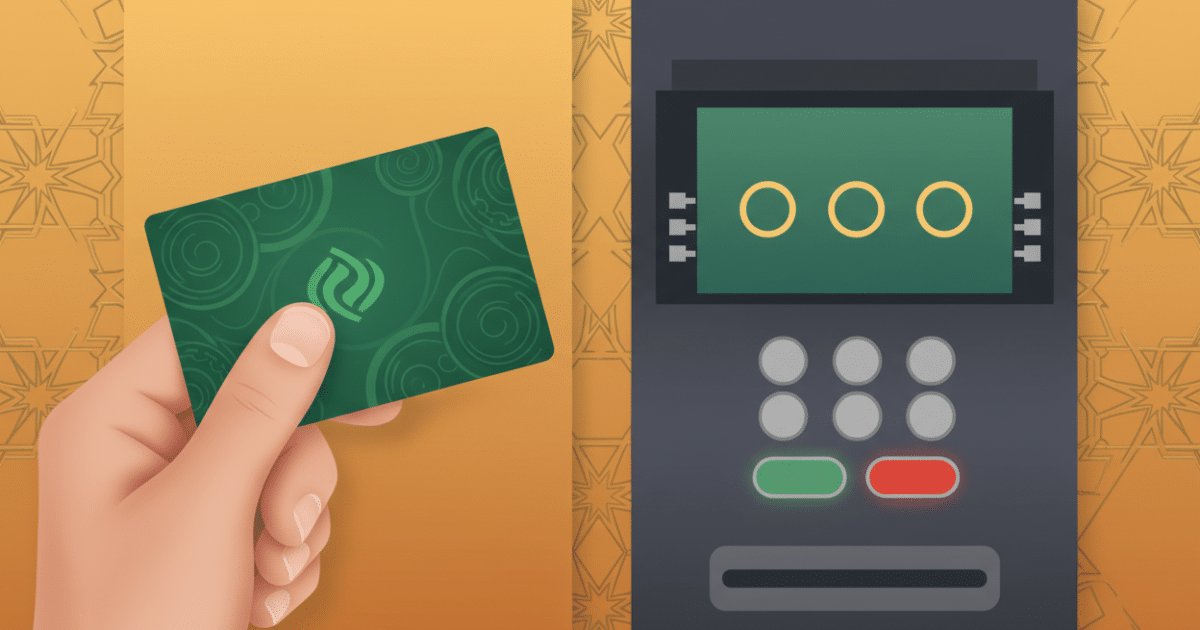
Start by waiting for the confirmation SMS sent to your registered mobile number. This message contains a temporary PIN. Without it, the ATM activation cannot proceed. Once the SMS arrives, take the card and the temporary PIN to the nearest Bank of Punjab ATM or partner bank ATM.
Step-by-step ATM PIN activation
- Insert the Ramzan Nigehban Card into the ATM slot
- Enter the temporary PIN received via SMS when prompted
- Select the option to create a new PIN
- Type your chosen four-digit PIN — avoid obvious combinations like 1234 or 0000
- Re-enter the same PIN to confirm and finalize activation
The card becomes fully operational immediately after this process completes. Beneficiaries can then withdraw funds or make purchases at registered partner stores. The entire activation can also be completed at a Bank of Punjab branch or at designated Ramzan relief distribution centers if ATM access is limited in your area.
approximate relief amount loaded onto each Nigehban Digital Relief Card
What to do if your Nigehban Card PIN is forgotten or blocked
Forgetting a PIN or triggering a card lockout is more common than most people expect, particularly for first-time digital card users. The Nigehban Digital Relief Card follows standard banking security protocols — entering the wrong PIN multiple times will lock the card automatically.

Resetting a forgotten PIN at the bank branch
The reset process requires an in-person visit to a partner bank branch. Remote resets are not available for this program. Bring the following documents:
- Original CNIC for identity verification
- Nigehban Relief Card (the physical card itself)
- Access to your registered mobile number for any SMS verification step
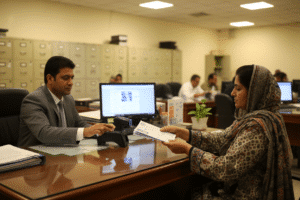
At the branch, staff will guide you through biometric verification to confirm your identity. Once biometric authentication clears, you create a new four-digit PIN on the spot. The new PIN activates immediately, meaning you can proceed to an ATM or utility store the same day.
Common problems and how to fix them
| Problem | Likely cause | Solution |
|---|---|---|
| PIN not working | Wrong PIN entered multiple times | Reset PIN at partner bank branch |
| Card blocked | Security lockout triggered | Contact bank support directly |
| Payment not received | Incomplete CNIC verification | Complete CNIC verification process |
| ATM withdrawal failed | Network issue at that ATM | Try a different ATM location |
A failed ATM withdrawal linked to network issues does not indicate a card problem. Simply moving to another ATM in the area resolves this in most cases. But if the issue persists across multiple ATMs, contact the bank's helpline before assuming the card is faulty.
Beneficiaries enrolled in other government support programs may find it useful to compare disbursement methods. The BISP March 2026 payment schedule follows a different release structure, and understanding both systems helps families plan their finances across Ramadan. Similarly, those curious about the broader Ramzan relief landscape across provinces can review the KPK Ramazan Relief Package announced for March 2026, which operates under a separate framework.
Security rules every cardholder must follow
The Nigehban Card PIN code is the only barrier between your relief funds and unauthorized access. Treating it carelessly puts the entire PKR 10,000 at risk. The program's guidelines are explicit on this point.
Never share the PIN with anyone, including family members or people claiming to represent the bank or the government. Do not write the PIN on the card itself or on any paper kept with the card. Use only official Bank of Punjab ATMs or registered partner ATMs — avoid informal money exchange points that may have card skimming devices attached.
If there is any suspicion that someone else has learned the PIN, change it immediately at the nearest ATM. The process is the same as the initial activation: insert the card, enter the current PIN, and select the option to create a new one. And if the card is lost or physically stolen, contact the bank helpline without delay to have the card blocked before any unauthorized withdrawal occurs.
The shift to a digital card system for Ramadan relief represents a deliberate move by the Punjab government to reduce the leakage and corruption that plagued older cash distribution models. Transparent, traceable, and tied to biometric identity, the Nigehban Digital Relief Card puts accountability at the center of social assistance delivery. For families navigating this system for the first time, understanding the PIN activation process is not just a technical task — it is the key to actually receiving the support they are entitled to. Those familiar with the 8171 Ehsaas payment verification system will recognize similar principles at work here: identity-linked, SMS-confirmed, and designed to reach the right hands.