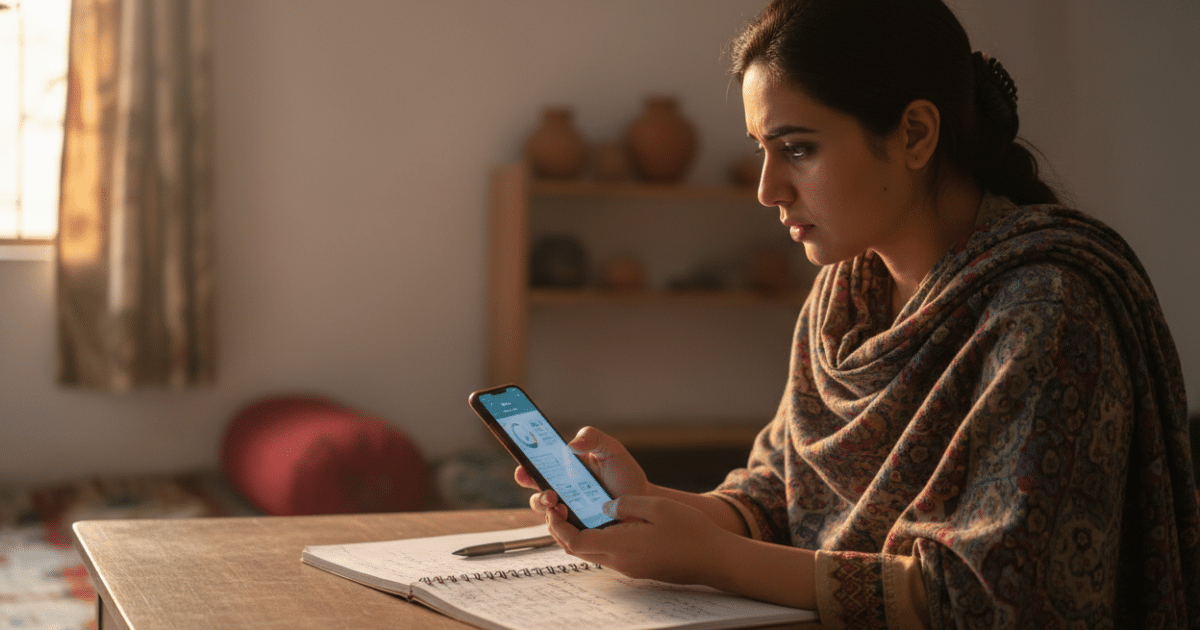
The BISP 8171 Web Portal (bisp.gov.pk) is Pakistan's primary digital gateway for accessing Ehsaas Program financial assistance. Eligible citizens can check their status, submit applications, and receive cash transfers without visiting a government office. Understanding how the portal works — and how to use it correctly — is the difference between receiving support and falling through the cracks.
Pakistan's social protection landscape shifted significantly when the Benazir Income Support Programme (BISP) integrated the Ehsaas Program into a unified digital infrastructure. The 8171 web portal, accessible at bisp.gov.pk, brought government financial assistance within reach of millions of low-income households across the country. For families navigating poverty, inflation, and economic instability, this portal is not a convenience — it is a lifeline.
But access to the portal alone is not enough. Many applicants lose their eligibility or miss payments simply because they don't understand the registration process, the required documentation, or how to track their application status. This guide covers everything you need to know to apply through the BISP 8171 Ehsaas Program portal and secure the financial support you're entitled to.
The BISP 8171 web portal is Pakistan's central hub for social financial assistance
The BISP 8171 portal was built with a clear mandate: eliminate the bureaucratic barriers that historically prevented Pakistan's most vulnerable citizens from accessing state support. Before its launch, applicants had to physically visit district offices, wait in long queues, and navigate a paper-heavy process prone to delays and errors. The digital portal changed that equation entirely.
At its core, bisp.gov.pk serves as the official interface between the government and beneficiaries of the Ehsaas Program, Pakistan's flagship social protection initiative. The portal allows users to check eligibility, submit new applications, verify payment status, and update personal information — all from a smartphone or computer.
What the 8171 SMS service adds to the portal
The 8171 helpline works in tandem with the web portal. By sending your CNIC (Computerized National Identity Card) number to 8171, you receive an automated SMS response confirming whether you are registered in the Ehsaas system and whether a payment is pending. This dual-channel approach — web portal plus SMS service — was designed specifically to reach citizens in areas with limited internet access.
The SMS service is free of charge and available 24 hours a day. But for full application management, the web portal at bisp.gov.pk remains the authoritative platform.
Who manages the portal and who is eligible
The portal is administered by the Benazir Income Support Programme, a federal government body operating under the Ministry of Poverty Alleviation and Social Safety. Eligibility for the Ehsaas Program is determined through the National Socio-Economic Registry (NSER), a household survey that scores families based on income, assets, and living conditions.
Broadly, eligible beneficiaries include:
- Households below the poverty line as defined by NSER scores
- Women-headed households
- Persons with disabilities
- Families affected by natural disasters or economic shocks
A valid CNIC is mandatory for all applicants. Without it, neither the web portal nor the SMS service can process a request.
How to register on the BISP 8171 portal — the complete process
Registering on the BISP 8171 web portal is straightforward, but precision matters. Errors in CNIC numbers, mobile numbers, or personal details can delay processing by weeks. Follow these steps carefully.
Step 1: Prepare your documents before opening the portal
Before visiting bisp.gov.pk, gather the following:
- Your original CNIC (must be valid and not expired)
- A registered Pakistani mobile number linked to your CNIC
- Basic household information (number of dependents, income sources, address)
- B-Form numbers for children under 18, if applicable
If your CNIC is expired, renew it at the nearest NADRA office before applying. An expired identity document will result in automatic rejection.
Step 2: Navigate to the official portal and locate the application section
Go directly to bisp.gov.pk — not a third-party site claiming to offer registration services. Scam websites mimicking the official portal have targeted applicants in the past. The official URL is the only legitimate entry point.
On the homepage, locate the "Ehsaas Program Registration" or "Apply Now" section. The portal is available in both Urdu and English, so switch to your preferred language using the toggle at the top of the page.
Never share your CNIC number or bank details with unofficial websites, agents, or individuals claiming to help you register for Ehsaas. BISP registration is free and requires no intermediary.
Step 3: Complete the online application form
Enter your 13-digit CNIC number exactly as it appears on your card — no dashes, no spaces. The portal will auto-populate some fields based on NADRA records. Review every pre-filled field carefully before proceeding.
Fill in your household details accurately. The NSER scoring system cross-references your submission against existing government databases, so inconsistencies between your application and official records will flag your file for manual review, slowing down the process significantly.
Once the form is complete, submit it and note the reference number provided. Keep this number — you will need it to track your application status.
Step 4: Verify your status via SMS or the portal
After submission, send your CNIC number to 8171 to confirm that your application has been received. The system typically responds within minutes. You can also log back into bisp.gov.pk and use the "Check Status" feature by entering your CNIC and reference number.
Processing times vary. First-time applicants generally wait 4 to 8 weeks for a determination. If your application is approved, you will receive an SMS notification with instructions on how to collect your payment.
The financial benefits available through the Ehsaas Program
The Ehsaas Program is not a single payment scheme — it is an umbrella of targeted financial assistance programs, each designed to address a specific dimension of poverty. Understanding which components you may qualify for helps you maximize the support available through the BISP portal.
Ehsaas Kafaalat: the core cash transfer program
Ehsaas Kafaalat is the flagship component. Eligible women receive a quarterly cash transfer directly into a BISP-issued payment card or through designated payment agents. The program specifically targets women as primary recipients to strengthen their financial autonomy within households.
Payments are disbursed through HBL (Habib Bank Limited) and other partnered financial institutions. Recipients can withdraw funds at designated bank branches, ATMs, or through Easypaisa and JazzCash mobile wallets — a significant step toward financial inclusion for populations that previously had no access to formal banking. Managing your household finances digitally, much like checking your monthly electricity bill online, has become increasingly accessible for Pakistani citizens through these government digital initiatives.
Ehsaas Taleemi Wazaif: education stipends for children
Families with school-aged children can access Ehsaas Taleemi Wazaif, a conditional cash transfer tied to school enrollment and attendance. The program provides monthly stipends for primary and secondary school students, with higher amounts for girls to address gender-based enrollment gaps.
This component requires annual renewal through the portal. Parents must confirm continued enrollment each academic year to maintain eligibility.
Emergency and disaster relief payments
The Ehsaas Emergency Cash component activates during national crises — floods, earthquakes, and economic shocks. During the COVID-19 pandemic, this mechanism delivered emergency payments to over 12 million households within weeks, demonstrating the infrastructure's capacity for rapid deployment.
Eligibility for emergency payments is determined automatically based on NSER data and geographic targeting. Registered beneficiaries in affected areas receive notifications via the 8171 SMS service.
Registering on the BISP 8171 portal once makes you eligible for multiple Ehsaas Program components — Kafaalat cash transfers, education stipends, and emergency relief — without submitting separate applications for each.
Real experiences from Ehsaas Program beneficiaries
The numbers behind the Ehsaas Program are significant, but the human reality is what defines its impact. Across Pakistan's provinces, the program has reached communities that formal financial systems had long ignored.
Households in rural Punjab
In rural districts of Punjab, women who had never held a bank account received their first formal financial instrument through the BISP payment card. For many, this was the first time they had independent access to money — not mediated through a husband, father, or male relative. Beneficiaries in these communities consistently report using payments for food, children's school fees, and basic medical expenses.
The digital infrastructure also introduced these women to mobile banking. Many who initially withdrew their full Kafaalat payment in cash have since begun using mobile wallets for everyday transactions — a behavioral shift with long-term economic implications. This mirrors the broader trend of Pakistanis managing financial services digitally, from social support payments to utility bill management.
Flood-affected families in Sindh
The 2022 floods devastated large portions of Sindh, displacing millions of families. The Ehsaas Emergency Cash program activated within days of the disaster declaration, reaching registered beneficiaries through the existing 8171 infrastructure. Families who had completed their BISP registration before the floods received payments within the first two weeks — those who had not were forced to wait for manual registration at temporary relief camps.
This experience underlines a point that cannot be overstated: registering on the portal before a crisis hits is the most effective form of disaster financial preparedness available to low-income Pakistani households.
BISP regularly updates its beneficiary lists based on new NSER surveys. Even if you were previously rejected, changes in your household’s economic situation may make you eligible in a subsequent survey cycle. Re-registration is possible and encouraged.
Frequently asked questions about the BISP 8171 portal and Ehsaas Program
The volume of questions surrounding the BISP 8171 web portal reflects both the program's scale and the gaps in public awareness about how the online registration process works. The most common questions deserve direct, unambiguous answers.
Can men apply for Ehsaas Kafaalat?
Ehsaas Kafaalat designates women as the primary beneficiary within each household. However, men who are the sole head of a household with no female adult member may apply under specific circumstances. The portal's eligibility check will clarify this based on household composition data.
What happens if my application is rejected?
A rejection is not permanent. The portal provides a reason for rejection — typically an expired CNIC, income above the threshold, or a data mismatch with NADRA records. Address the specific issue, update your information through the portal, and reapply. You can also visit your nearest BISP district office to request a manual review.
How long does it take to receive the first payment after approval?
After approval, the first payment is typically disbursed within 30 to 60 days. You will receive an SMS from 8171 when your payment is ready for collection. Payments are not deposited automatically — you must collect them through the designated channel indicated in your approval notification.
Is there a fee to register on the portal?
No. Registration on bisp.gov.pk is completely free. Any individual or service charging a fee to register you for the Ehsaas Program is operating fraudulently. Report such activity to BISP's official helpline.
Can I update my mobile number or address after registration?
Yes, through the portal's profile management section. Keeping your contact information current is critical — payment notifications and status updates are sent to the registered mobile number. A wrong number means missed communications and potentially missed payments.
- Free, 24/7 online registration with no intermediary required
- Multiple financial assistance components accessible through a single registration
- SMS-based status tracking via 8171 for users with limited internet access
- Payments disbursed through mobile wallets, reducing need for physical bank visits
- Automatic eligibility for emergency relief once registered in the NSER system
- Requires a valid, non-expired CNIC — a barrier for those with documentation issues
- Processing times of 4-8 weeks can be difficult for households in immediate need
- Portal errors and data mismatches with NADRA records cause avoidable delays
- Rural areas with poor internet connectivity face challenges using the web portal
The BISP 8171 web portal represents a genuine shift in how Pakistan delivers financial assistance to its most vulnerable citizens. The system is not perfect — documentation barriers, processing delays, and connectivity gaps remain real obstacles — but for millions of households, it is the most direct path to economic support available. Register early, keep your information accurate, and use the 8171 SMS service to stay informed at every step of the process.