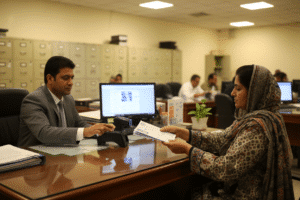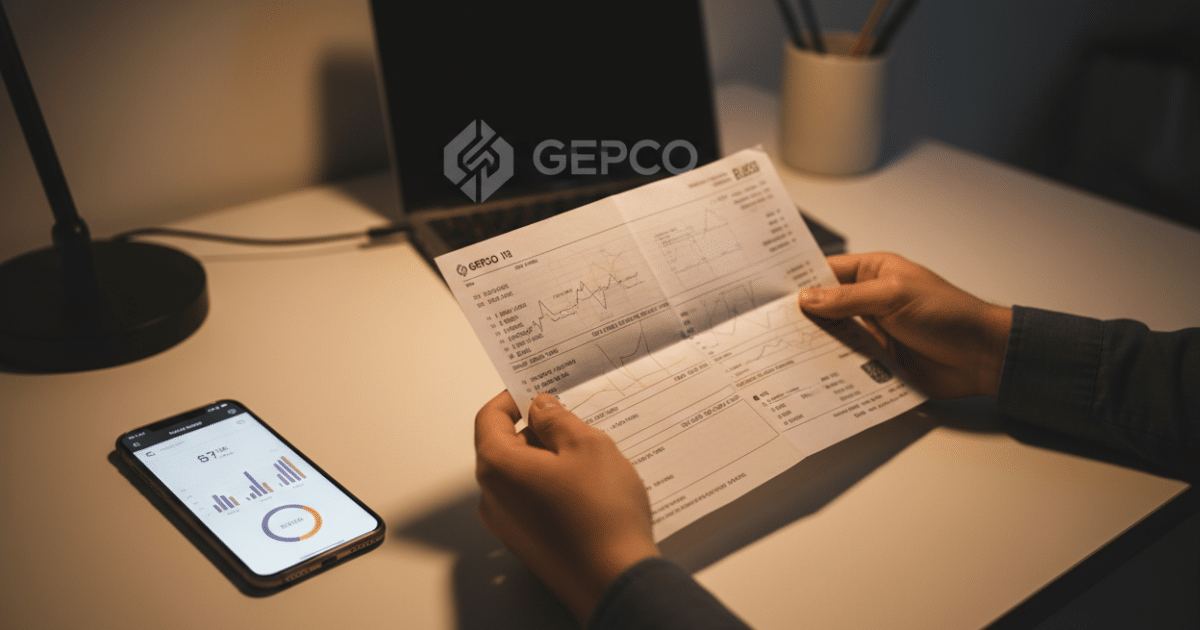
GEPCO online bill verification is now available free of charge through pkbillchecker.pk. Customers across Gujranwala, Sialkot, Narowal, and four other districts can check, download, and print a duplicate copy of their electricity bill in seconds — using only their 14-digit reference number.
Millions of electricity consumers in northern Punjab have one recurring frustration: a misplaced bill. Whether the paper copy never arrived, got lost before the due date, or simply needs a second look before payment, the inability to access billing information quickly creates real financial consequences. Late payments trigger additional charges, and without the correct figures, budgeting becomes guesswork.
The Gujranwala Electric Power Company Limited, better known as GEPCO, serves one of Pakistan's most densely populated electricity distribution zones. Understanding how to use its online services — and what every line item on that bill actually means — turns a routine task into a genuine tool for household financial management.
GEPCO's reach and the scale of its operations
GEPCO did not always exist as an independent entity. Its roots trace back to 1977, when the Area Electricity Board (AEB) was established in Gujranwala under the umbrella of WAPDA (Water and Power Development Authority). For over two decades, electricity distribution in the region operated within that centralized structure.
The shift came in April 1998, when WAPDA was formally divided into two distinct sectors: water and electricity. That restructuring led directly to the incorporation of GEPCO as a separate distribution company under PEPCO (Pakistan Electric Power Company) in 1998. The broader national framework that emerged from this reform placed generation in the hands of GENCO (Generation Companies), transmission under NTDC (National Transmission and Dispatch Company), and local distribution with companies like GEPCO, collectively known as DISCOs (Electricity Distribution Companies).
A distribution network covering six districts
Today, GEPCO operates across a service territory of 17,206 km², covering six districts in Punjab:
- Gujranwala
- Gujrat
- Sialkot
- Narowal
- Hafizabad
- Mandi Baha-ud-din
The numbers behind this network are substantial. GEPCO maintains 3,098,120 connections and serves approximately 3.909 million consumers. Monthly revenue collection averages 9,000 million rupees. The company's registered address is 565/A Model Town, G.T. Road, Gujranwala, and its official website is www.gepco.com.pk.
consumers served by GEPCO across six Punjab districts
How GEPCO fits into Pakistan's electricity framework
GEPCO operates under the regulatory oversight of NEPRA (National Electric Power Regulatory Authority), which sets the tariff structures that appear on every consumer bill. The Government of Pakistan (GOP) also plays a direct financial role through subsidy mechanisms embedded in the billing system — a point that becomes relevant when reading certain surcharge lines on the duplicate bill.
How to check your GEPCO online bill
The fastest method to access a GEPCO duplicate bill requires nothing more than an internet connection and a 14-digit reference number (Ref #). The process through pkbillchecker.pk takes under a minute.
- Open pkbillchecker.pk in any browser
- Click on the GEPCO option
- Enter the 14-digit reference number from any previous bill
- Press Enter — the current bill appears on screen
The Consumer ID, which is a 10-digit number, is a separate identifier printed on the bill. Both numbers are worth keeping on record, but the reference number is the primary input for online verification.
Downloading and printing a duplicate copy
Once the bill is displayed, saving a PDF copy or sending it directly to a printer takes two additional steps at most.
To download: click the download tab in the pop-up window, or use the three-dot menu in the top right corner of the browser and select the download or print option. The file saves in PDF format, which preserves all bill formatting and makes it suitable for record-keeping.
To print immediately: use the keyboard shortcut CTRL+P, or select "Print" from the browser's menu. Both residential and commercial consumers can use this method. Agricultural connection holders follow the same procedure.
Your GEPCO bill displays consumption history for the past 12 months. This data is useful for spotting unusual spikes in usage and for estimating future bills when planning monthly expenses.
Reading the charges on a GEPCO electricity bill
A GEPCO bill is not a single figure. It is a breakdown of multiple components, each governed by a different regulation or policy. Knowing what each line means prevents overpayment disputes and helps consumers verify accuracy before paying.

Fixed and variable charges
The core of the bill reflects actual electricity consumption, billed at rates determined by NEPRA. On top of that base cost, several additional charges appear:
GST (General Sales Tax) is levied at 17% on electricity bills across Pakistan. This is a federal tax, not a GEPCO-specific charge.
Electricity Duty (ED) is calculated at 1.5% of the electricity cost. This is a provincial-level charge.
FC Surcharge is fixed at 43 paisa per unit. This charge exists specifically to secure the repayment of debt held by Power Holding Private Limited, a government-linked entity created to manage circular debt in Pakistan's power sector.
QTR Adj (Quarterly Adjustment) is levied three times per year, at three-month intervals. It reflects adjustments in fuel costs or other variables that are reconciled quarterly rather than monthly.
Surcharges, subsidies, and deferred amounts
The TR Surcharge (Tariff Rationalization Surcharge) works in two directions. When the figure is positive, it represents a subsidy that the Government of Pakistan pays on the consumer's behalf — effectively reducing what the consumer owes. When it is negative, GEPCO transfers the amount to GOP under the Inter Disco Tariff Rationalization Surcharge (IDTR SUR) mechanism.
Late Payment Surcharge applies when a bill is not settled before its due date. The calculation uses a coefficient of 0.1, applied to the outstanding amount. Avoiding this charge is straightforward — pay before the printed deadline.
A Deferred Amount may also appear on some bills. This represents a portion of charges that has been officially postponed, often during periods of government-mandated relief programs. Consumers can pay the deferred amount in full or in installments without incurring any late payment surcharge on that specific portion.
Connection type codes also appear on bills: S-P indicates a single-phase connection, while 3P denotes a three-phase connection. These codes matter when comparing consumption patterns or applying for load changes.
The 17% GST and the FC Surcharge of 43 paisa/unit are federal-level charges that appear on all GEPCO bills regardless of consumption level or connection type. They cannot be waived or negotiated at the distribution company level.
Registering your CNIC, mobile number, and SMS alerts
GEPCO offers a registration system that links a consumer's CNIC (Computerized National Identity Card) and mobile number to their account. The stated purpose is twofold: it prevents fraudulent activity on the account, and it enables digital communication about billing and meter readings.
CNIC and mobile registration process
The registration form asks for four pieces of information: full name, CNIC number, mobile number, and the 14-digit reference number. After filling in these fields, clicking Register/Save completes the process. This step is worth completing early — it creates a verified link between the consumer's identity and their electricity account, which simplifies future service requests.
SMS alerts for meter reading notifications
Consumers who want to receive automatic SMS notifications when a meter reading is recorded have three options for enrolling in the service:
- Provide the mobile number directly to the meter reading staff during their visit
- Fill out the SMS registration form on www.gepco.com.pk
- Send the reference number and mobile number via SMS to 0333-0430111
The SMS service is particularly useful for consumers who are not always home when the meter reader visits, or for those who want immediate confirmation that a reading has been logged correctly before the bill is generated.
Paying the GEPCO bill and filing complaints
Online and digital payment methods
GEPCO bill payments can be completed through several digital channels. The general process for online banking payments follows these steps:
- Create an online banking account with any participating bank
- Install the bank's mobile application (available on Google Play Store)
- Complete registration using security questions and an OTP (one-time password)
- Log in and select the bill payment section
- Choose GEPCO as the utility provider and enter the reference number
Mobile payment platforms Easypaisa and JazzCash also support GEPCO bill payments, as do NADRA collection points and standard bank branches. Post offices and GEPCO's own customer service centers remain available for consumers who prefer in-person transactions.
Non-payment before the due date printed on the bill results in a Late Payment Surcharge being added to the following month’s bill. The surcharge is calculated using a coefficient of 0.1 on the unpaid amount — an avoidable cost that compounds if payments are missed repeatedly.
Filing a complaint with GEPCO
When billing discrepancies, connection faults, or service issues arise, GEPCO provides multiple complaint channels. The 118 helpline operates 24 hours a day, 7 days a week and is the fastest route for urgent issues such as outages or meter faults.
For billing-related concerns specifically, the options are:
- Phone: +92-55-9200504 / +92-55-9200516 / +92-55-9200592
- E-complaint portal: http://ccms.pitc.com.pk/complaint (managed through PITC)
- Email: [email protected]
- Quality assurance contact: [email protected]
The e-complaint system through the PITC portal creates a documented record of the submission, which is useful if the issue requires follow-up or escalation. Consumers submitting complaints about incorrect meter readings or disputed charges should reference their 14-digit reference number and, where possible, attach a downloaded copy of the bill in question.
New connections and meter transfers
Consumers looking to apply for a new electricity connection can use the ENC (Electricity New Connection) portal, which handles residential, commercial, and agricultural connection requests digitally. Meter transfer requests — such as when a property changes ownership — follow a separate procedure managed through GEPCO's customer service infrastructure. Both services are accessible through the main www.gepco.com.pk website, which serves as the central hub for all consumer-facing digital services offered by the company. Having a verified CNIC registration on file significantly streamlines both processes, as the identity link is already established in the system before the application is submitted.