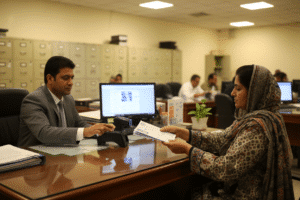
The BISP March 2026 payment follows a staggered regional schedule starting March 10, covering a dual-month cycle that merges March and April disbursements. Eligible beneficiaries can verify their status via SMS to 8171 or through the official web portal before heading to collection centers.
The Benazir Income Support Programme has officially announced its disbursement calendar for the upcoming cycle, and the details matter for millions of low-income families across Pakistan. This round is not a standard single-month release — the government has structured it as a dual-month cycle, combining March 2026 and April 2026 payments into one consolidated disbursement. Families who missed previous cycles, whose payments were under verification, or whose amounts were pending will also receive their dues within this same window.
Understanding the schedule, the collection process, and the common pitfalls can be the difference between receiving full payment and walking away empty-handed.
BISP March 2026 payment schedule by province
The rollout is phased across five provinces and regions, each with its own start date. The Government of Pakistan designed this staggered approach to manage crowd flow at collection points and ensure smoother biometric verification across diverse geographies.
| Province / Region | Payment Start Date | Collection Points |
|---|---|---|
| Punjab | March 10, 2026 | ATMs + BISP Centers |
| Sindh | March 12, 2026 | Designated Banks + Centers |
| Khyber Pakhtunkhwa | March 13, 2026 | ATMs + Biometric Centers |
| Balochistan | March 15, 2026 | Mobile Vans + Centers |
| Gilgit-Baltistan & AJK | March 16, 2026 | Local Banks + Post Offices |
Punjab leads the schedule on March 10, with disbursements available at ATMs and BISP centers. Sindh follows two days later, relying on designated bank branches alongside dedicated centers. Khyber Pakhtunkhwa opens on March 13, using both ATMs and biometric verification centers. Balochistan, where infrastructure is more dispersed, starts on March 15 and relies heavily on mobile vans to reach remote communities. Finally, Gilgit-Baltistan and AJK begin on March 16, with local banks and post offices serving as primary collection points.
Special arrangements for remote areas
The deployment of mobile vans in Balochistan is a direct response to the geographic challenges of the province. For GB and AJK, the combination of local bank branches and post offices reflects the region's existing financial infrastructure. Beneficiaries in these areas should confirm their nearest collection point in advance, as post offices may operate on limited hours.
Partner banks handling disbursements
The four official partner banks for this cycle are HBL, Bank Alfalah, UBL, and Allied Bank. ATMs affiliated with these institutions are authorized collection points. If an ATM is offline on the day of collection, beneficiaries should go directly to the nearest BISP payment center rather than attempting multiple ATM withdrawals, which can trigger temporary account locks.
How to check your BISP payment status before collection
Verifying eligibility before traveling to a collection center saves time and avoids unnecessary trips. The government provides two official channels for real-time status checks.
SMS verification via 8171
The simplest method requires no internet connection. Open the SMS application on any mobile phone, type the 13-digit CNIC number, and send it to 8171. The system returns a confirmation message showing eligibility status, the payment amount, and the current cycle. This service is free and available 24 hours a day. For those who prefer to verify without data connectivity, this offline payment check method is the most reliable option.
Web portal verification
Beneficiaries with internet access can visit the official BISP web portal directly. The process involves entering the CNIC, completing a CAPTCHA, and viewing real-time status. The BISP 8171 web portal provides the same eligibility and amount information as the SMS service, but with a more detailed interface showing payment history.
If the SMS or portal returns “Under Verification” or “No Record Found,” do not attempt collection. Visit the nearest Tehsil headquarters in person with your original documents to resolve the issue before the cycle closes.
Documents required and collection safety
Arriving at a collection center with the right documents prevents delays and protects against fraud. The original CNIC is mandatory for all beneficiaries. Those collecting Taleemi Wazaif (educational stipends) must also bring the B-Form for the child enrolled in school. The SMS confirmation from 8171 serves as proof of eligibility on the day of collection. A proof of residence may also be requested depending on the collection zone, though this requirement varies by region.

Protecting your payment from unauthorized agents
Fraud at collection centers remains a real risk. Unauthorized agents sometimes offer to "assist" beneficiaries in exchange for a portion of the payment. This practice is illegal, and the full amount belongs to the registered beneficiary. The rule is straightforward: never pay any agent or intermediary to access your funds. Count the money before leaving the counter, keep the CNIC secure at all times, and report any illegal deduction immediately to the BISP complaint bureau available at collection centers or by calling the 8171 helpline.
Visiting centers early in the morning reduces wait times and minimizes exposure to crowded conditions. Beneficiaries should also use only officially designated centers, not informal locations that may appear during disbursement periods.
Common problems and how to resolve them
Five recurring issues affect a significant portion of applicants during each payment cycle. Knowing the solutions in advance avoids delays that can push a payment into the next cycle.
Biometric verification failure is among the most frequent obstacles. The fix is often simple: clean the thumb before scanning, try a different finger, or visit a NADRA office to update biometric records if the problem persists. CNIC expiry or incorrect data blocks payment entirely — renewing the CNIC at NADRA before collection is the only resolution. A "No Record Found" message means the household data needs updating through the NSER (National Socio Economic Registry); visiting a BISP office to trigger this update is the required step.
ATM downtime affects beneficiaries in Punjab and KP most frequently, given their reliance on ATM-based disbursement. Redirection to the nearest payment center resolves this immediately. Finally, families who missed the March 2026 disbursement entirely will receive their payment bundled with the April 2026 cycle — the dual-month structure was designed precisely to accommodate this scenario.
A 48-hour re-verification window applies if payment does not arrive as expected. Act within this window by visiting the Tehsil bureau — waiting longer may delay your funds to the next cycle.
Taleemi Wazaif and the broader social impact
The March 2026 BISP disbursement also covers the Taleemi Wazaif component, the educational stipend program designed to keep children enrolled in school. Families receiving this benefit must present the B-Form alongside the standard CNIC. The stipend directly ties financial support to school attendance, which means any disruption in payment collection can affect a child's continued enrollment.
Beyond education, the structural decision to channel payments directly to women has measurable consequences. Female-headed households and women registered as primary beneficiaries gain direct control over family finances, increasing their decision-making power within the household. This design choice reflects the program's broader objective of reducing poverty through women's economic empowerment.
For families also enrolled in food assistance programs, combining BISP support with initiatives like the Ehsaas Rashan program or the Ramzan relief package can provide more comprehensive coverage during high-cost periods. These programs operate through overlapping registration systems, and keeping NSER data current ensures eligibility across all available benefits.
official SMS number to verify BISP payment status — free, 24/7, no internet required
The March 2026 payment cycle is one of the more complex disbursements in recent BISP history, given the dual-month structure and the inclusion of pending and delayed payments from previous cycles. Beneficiaries who stay informed about their regional start date, verify status through official channels before traveling, and arrive at collection centers with complete documentation will have the smoothest experience. Those who encounter issues have clear resolution paths — through NADRA, NSER, Tehsil offices, or the 8171 helpline — and a 48-hour re-verification window to act before their payment shifts to the next cycle.