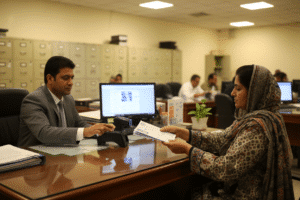
The Rehmat Card Scheme is a Punjab Government social protection initiative offering Rs 100,000 in financial assistance to low-income families, widows, and vulnerable households across the province. Applying is straightforward through the official Rehmat Card Apply Online Web Portal or the dedicated Rehmat Card Mobile App, but eligibility depends on strict documentation and income verification requirements.
The Punjab Government has positioned the Rehmat Card as one of its most ambitious welfare programs in 2026, targeting the families who need support the most. Whether you are a widow managing a household alone or a low-income family struggling with food, health, and education costs, this scheme is designed to provide real, measurable relief.
But applying correctly matters. Errors in your CNIC number, incomplete paperwork, or using unofficial websites can get your application rejected outright. Here is everything you need to know to apply successfully.
Rehmat Card scheme: who qualifies and what the money covers
The Rehmat Card Scheme is not a universal cash transfer. The Government of Punjab has defined clear eligibility criteria to ensure that the Rs 100,000 assistance reaches those with genuine need, not those who already benefit from major government support programs.
Eligibility criteria for the Rehmat Card
| Criterion | Condition |
|---|---|
| Residence | Punjab province only |
| Identity document | Valid CNIC mandatory |
| Income level | Low-income household |
| Other assistance | Must not receive significant aid from other government programs |
| Priority group | Widows and vulnerable women |
The priority given to widows and female heads of household is formalized through a dedicated sub-program called the Widow Card Punjab. Women in this category who can provide a husband's death certificate are treated as high-priority applicants during the verification process.
What the financial assistance covers
The Rs 100,000 disbursement is not restricted to a single category of spending. The Punjab Government intends for these funds to address the most pressing household needs: food security, basic healthcare, and educational expenses for children. Families who receive the payment report reduced financial stress and greater capacity to handle unexpected costs, from medical emergencies to school fees. The broader goal is to improve household stability in a sustained way, not just provide a one-time patch. Programs like BISP's quarterly installments operate on a recurring basis, but the Rehmat Card takes a different approach by concentrating a larger lump sum into a single disbursement per eligible family.
How to apply for the Rehmat Card online step by step
The Rehmat Card Apply Online Web Portal, hosted on the official Punjab Government website, is the primary application channel. The process is designed to be accessible even for applicants with limited digital experience, but every step must be completed accurately.
Applying through the official web portal
The application process follows a clear sequence:
- Visit the official Punjab Government website
- Open the Rehmat Card Portal section
- Click on the "Apply Online" option
- Enter your CNIC number and personal details accurately
- Provide household income information and list family members
- Upload all required documents
- Submit the completed application form
- Wait for an SMS confirmation on your registered mobile number
One mistake at step four, entering a wrong digit in your CNIC, can trigger an automatic rejection or a significant processing delay. The system cross-references your identity number against government databases immediately, so accuracy is non-negotiable. Applicants who have previously navigated the PSER Punjab online registration process will recognize a similar structure here.
Applying through the Rehmat Card Mobile App
For applicants who prefer a smartphone-based process, the Rehmat Card Mobile App offers a parallel route:
- Open your official mobile app store
- Search for "Rehmat Card Mobile App"
- Select the official government-published application
- Tap "Install" and wait for the download to complete
- Open the app and begin the registration process
The mobile app mirrors the web portal's functionality but is optimized for smaller screens. Both channels feed into the same verification system, so the outcome and processing timeline are equivalent regardless of which method you choose.
Only use the official Punjab Government website or the verified app store listing to apply. Third-party websites claiming to process Rehmat Card applications are fraudulent and may steal your personal data or CNIC details.
Documents required for the Rehmat Card application
Gathering the right paperwork before starting your application saves time and prevents rejection. The Punjab Government requires a specific set of documents for all applicants, with one additional requirement for widows.

All applicants must provide:
- A valid, original CNIC
- Proof of residence in Punjab province
- Household income details (salary slips, informal income declaration, or similar)
- A working contact phone number
Widows applying under the Widow Card Punjab sub-program must also submit a death certificate for their husband. This document is used during the priority verification stage and determines whether the applicant qualifies for the accelerated processing track available to female heads of household.
Incomplete documentation is one of the three most common reasons for rejection, alongside incorrect CNIC data and inaccurate income reporting. Submitting inflated or understated income figures to game the eligibility criteria is flagged during cross-verification and results in disqualification. The system works similarly to how BISP payment delays are triggered by data mismatches in that program's verification process.
Verification process and payment methods
Submitting an application is only the beginning. Before any funds are released, the Punjab Government runs a multi-stage verification process designed to confirm eligibility and prevent duplicate or fraudulent claims.
How the Punjab Government verifies applicants
The verification sequence covers four distinct checks:
- CNIC validation against national identity databases
- Household data confirmation, including family size and composition
- Income verification to confirm the low-income threshold is met
- Cross-referencing with other social welfare programs to ensure the applicant is not already receiving major government assistance
This last check is particularly relevant for households that may already be enrolled in federal programs. The Nigehban Card and similar provincial schemes follow comparable cross-program verification logic, as seen with Nigehban Card eligibility checks.
How approved payments are disbursed
Once an application clears all verification stages, the Rs 100,000 is released through one of three channels:
- Bank transfers directly to a verified account
- Government payment centers where recipients collect funds in person
- Digital payment systems for applicants enrolled in mobile wallet platforms
disbursed per eligible family under the Rehmat Card Scheme
The Punjab Government has built the distribution system around secure, traceable payment channels to minimize leakage and ensure funds reach verified beneficiaries. Applicants are notified via SMS when their payment is processed and ready for collection or transfer. The government has also announced plans to expand the program's reach in future phases, meaning families who do not qualify today may become eligible under revised criteria as the scheme scales.
Always use the official Punjab Government portal or the verified Rehmat Card Mobile App to apply. Keep your CNIC accurate, documents complete, and income information truthful. Errors at any stage will delay or void your application. Once approved, your Rs 100,000 payment arrives through bank transfer, a government center, or a digital wallet — whichever channel you registered during the application.
Those navigating Pakistan's broader social assistance landscape can also explore BISP's 8171 web portal for federal-level support that may complement the Rehmat Card benefit at the provincial level. The two programs operate independently, but eligible families in Punjab can assess both to understand what combination of assistance they may access without violating the "no major duplicate aid" restriction that the Rehmat Card verification system enforces.