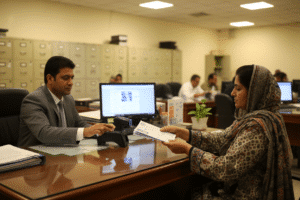
The BISP biometric verification system blocks payments when fingerprint data doesn't match NADRA records — a problem affecting thousands of Benazir Kafalat beneficiaries in 2026. Whether the cause is worn fingerprints, an expired CNIC, or a technical scanner error, there are clear, official steps to resolve the issue and collect your Rs 13,500 quarterly assistance.
Every quarter, millions of registered women across Pakistan head to authorized payment centers to collect their BISP assistance. And every quarter, a significant number walk away empty-handed after seeing the dreaded "Biometric Verification Failed" message on the screen. The frustration is real, but the situation is almost always fixable — provided you know exactly what to do and where to go.
This guide covers every documented cause of biometric failure, the complete resolution process, and the fraud risks that exploit beneficiaries who are already vulnerable.
Why BISP biometric verification fails
The BISP 8171 biometric system cross-references your fingerprint against the data held by NADRA (National Database and Registration Authority). When there's a mismatch, payment stops immediately. Understanding the root cause is the first step toward fixing it.
The most common technical causes
Worn or faded fingerprints are the single most frequent problem, particularly among elderly women enrolled in the Benazir Kafalat program. Years of manual labor, washing, or simply aging can degrade the ridge patterns that scanners rely on. Younger beneficiaries can also experience this after a hand injury or prolonged exposure to water.
Scanner hardware failures happen more often than BISP officially acknowledges. A malfunctioning biometric device at one payment center may reject a fingerprint that would pass without issue at a different location. If you've failed at one center, trying another nearby is a legitimate troubleshooting step before escalating to NADRA.
Expired CNIC is a straightforward but easily overlooked cause. If your national identity card has passed its validity date, the system flags your record as inactive, and the payment is blocked regardless of whether your fingerprints are physically intact.
Data and registration problems
Beyond physical fingerprint issues, problems within the database itself trigger failures. If your household data in the NSER (National Socio Economic Registry) is outdated — a common situation after a family member moves, dies, or a new child is born — the system may flag your record for review. Payments are then delayed until the dynamic NSER survey is completed and your file is updated.
A SIM card not registered under your own CNIC creates a separate verification gap. BISP cross-checks mobile numbers against NADRA records, and a mismatch here can block SMS confirmations and, in some cases, the payment itself.
Never share your CNIC number, mobile number, or any personal information with strangers claiming to help you fix biometric issues. Scammers specifically target BISP beneficiaries who are frustrated after a failed verification. All BISP services are entirely free.
How to check your payment status before visiting a center
Before traveling to a payment center — which often involves significant time and transport costs — verify your status through official channels. This tells you whether your payment has actually been released or if the problem lies in verification itself.
Via the web portal: Visit 8171.bisp.gov.pk, enter your 13-digit CNIC without dashes, complete the captcha, and click "Check Status." The portal reflects the most current data from BISP's central system, including whether a payment is pending, released, or blocked.
Via SMS: Send your 13-digit CNIC number to 8171. The reply message will confirm your eligibility status and payment situation. This method works without internet access, making it accessible to beneficiaries in rural areas. For a detailed walkthrough of the SMS verification method, the offline 8171 payment check guide covers every step.
If the system shows your payment is released but you're still failing verification at the counter, the problem is almost certainly biometric — and the next section explains exactly how to fix it.
The step-by-step fix for failed biometric verification
for NADRA biometric updates to sync with BISP systems
Updating your fingerprints at NADRA
The primary fix for fingerprint mismatches is a biometric update at your nearest NADRA registration center. The process is straightforward:

- Visit the nearest NADRA office with your original CNIC
- Request a biometric update or fingerprint refresh
- Complete the new fingerprint scan on their equipment
- Wait 24 to 48 hours for the data to synchronize from NADRA to BISP
- Return to an authorized payment center and attempt verification again
The synchronization window of 24 to 48 hours is fixed — there's no way to accelerate it. Attempting verification before that window closes will produce the same failure message.
Collecting your payment at an authorized center
Once your biometrics are updated and synchronized, the collection process at an HBL Konnect agent, Bank Alfalah branch, or official BISP payment campsite follows a fixed sequence:
- Arrive with your original CNIC (not a photocopy)
- Have the agent scan your CNIC
- Place the correct finger on the biometric scanner
- Wait for the NADRA match confirmation
- Collect your payment and request a receipt showing the exact amount withdrawn
A few practical details make a real difference here. Wash and dry your hands before scanning, but apply a light moisturizing cream if your skin is particularly dry or cracked — this helps the scanner read the ridges more accurately. Avoid using an injured finger; try an alternate finger on the same hand if one is damaged.
When the problem goes beyond fingerprints
For beneficiaries whose fingerprints cannot be read by any scanner — typically older women — BISP has established alternative pathways. Manual verification is available at the BISP Tehsil office level, where a staff member can assess the case directly. In documented hardship situations, a family representative verification process exists, and NADRA can issue a bypass letter that allows payment collection without standard biometric confirmation.
To access these options, visit your local BISP Tehsil office, register a formal complaint about the biometric failure, and submit supporting documents. The office will guide you through the manual verification request or the NSER data update process if outdated household records are contributing to the problem.
In 2026, BISP also introduced facial recognition as an alternative verification method in selected districts. Where this technology is deployed, beneficiaries who cannot provide usable fingerprints may be verified through a face scan instead — a significant relief for elderly and disabled recipients.
Payment amounts and program structure in 2026
Understanding what you're entitled to helps you confirm that the correct amount is paid when verification finally succeeds.
The standard Benazir Kafalat quarterly assistance stands at Rs 13,500. Beneficiaries who qualify for the Ramzan special package — launched under the CM Punjab Nigehban program — receive Rs 14,500 instead, reflecting the additional Rs 1,000 Ramzan relief component. For Punjab residents specifically, the 8070 helpline covers the Nigehban program, which provides a separate Rs 10,000 Ramzan assistance payment.
The latest BISP payment schedule details when each quarterly cycle opens, which matters because a "payment blocked" message sometimes simply means the current cycle hasn't been released yet — not that your verification has failed permanently.
Phase 3 of the Ehsaas program launched in January 2026, and April 2026 payments were updated accordingly. If you're unsure whether your payment falls under BISP Kafalat or an Ehsaas component, the BISP 8171 web portal provides a unified status check for both programs.
Always bring your original CNIC, your registered mobile number, any SMS confirmation received from 8171, and B-Forms for children if applicable. Missing documents extend the resolution process significantly.
Protecting yourself from fraud during the verification process
The biometric verification failure message creates a window of vulnerability. Beneficiaries who are confused, stressed, and eager to collect their payment are prime targets for scammers operating near payment centers and BISP offices.
The rules are simple and non-negotiable. BISP services cost nothing. No agent, facilitator, or "helper" has the right to charge a fee for assisting with verification, registration, or complaint filing. Anyone requesting payment for these services is running a scam. Only trust messages that arrive from the number 8171 — any other source claiming to represent BISP via WhatsApp, phone call, or in person should be treated with suspicion.
Never hand over your CNIC, never share your mobile number with unknown individuals near payment centers, and never allow someone else to handle your biometric verification unless they are an official BISP staff member at a registered center. The instructions BISP issued after the Rs 14,500 payment release reinforce these anti-fraud measures and are worth reviewing before your next collection attempt.
Biometric verification failures are a technical problem with a technical solution. NADRA can update your fingerprints, BISP Tehsil offices can process manual verifications, and the official portal gives you full visibility into your payment status before you leave home. The system has gaps, but it also has documented remedies for every documented failure mode — knowing them is what separates a wasted trip from a successful payment collection.