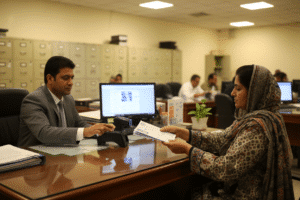
The 9999 Ramzan Package 13000 is a direct cash assistance program launched by the Pakistani government under Shehbaz Sharif, providing Rs 13,000 per eligible household during Ramadan. Families can check their eligibility by sending their 13-digit CNIC to 9999 via SMS — no fees, no middlemen, no complications.
Pakistan's inflation has hit low-income households hard. The cost of basic staples — flour, sugar, rice, cooking oil — has climbed steadily, and Ramadan, a month of increased household spending, puts additional pressure on families already stretched thin. The 9999 Ramzan Package 13000 is the government's direct response to that pressure, replacing older subsidy models tied to physical stores with straightforward cash transfers that give families real purchasing flexibility.
The program operates through two of Pakistan's most established social protection systems: BISP (Benazir Income Support Programme) and NADRA (National Database and Registration Authority). Eligibility is determined by the National Socio Economic Registry, NADRA's national poverty database. If your household is already registered there, the path to receiving Rs 13,000 is relatively straightforward.
Who qualifies for the Ramzan Package 13000
Not every Pakistani household qualifies, and understanding the eligibility criteria before attempting to register saves time and frustration.
Target beneficiaries and income thresholds
The program specifically targets low-income families, widows, and financially vulnerable women who are already listed in the government's poverty database. The logic is simple: if you're already in the system because of a previous BISP enrollment or a completed socio-economic survey, your profile is already being evaluated.
Households whose income exceeds the defined poverty threshold are automatically excluded. Government employees and individuals who own significant assets or property are also ineligible. The program is designed for those with the fewest resources, not as a broad subsidy for the general population.
Women who had not completed their BISP dynamic survey before January 2026 may see a “Pending” status when checking eligibility. This does not mean permanent disqualification — completing the survey resolves the issue.
CNIC and NADRA registration requirements
Your CNIC (Computerized National Identity Card) is the cornerstone of every verification step in this program. It must be valid, up to date, and correctly registered in NADRA's database. Any mismatch between the information on your CNIC and what NADRA holds on file will trigger a verification failure.
The SIM card you use to send the SMS check must also be registered under your own CNIC. Using a family member's number or an unregistered SIM is a common reason applications fail. If you're unsure whether your number is properly linked, NADRA offices can confirm registration status. For questions about whether two family members can share a registration number, the rules around shared 8171 registration are worth reviewing before you apply.
How to check eligibility via SMS to 9999
The SMS verification method is the fastest way to confirm whether your household appears in the system as eligible for the Ramzan Package 13000.
Step-by-step SMS process
The procedure is intentionally simple:
- Open the SMS application on your phone
- Type your 13-digit CNIC number with no spaces, no dashes (example format: 1234512345671)
- Send the message to 9999
- Wait for the automated system response
The system will return a message indicating your eligibility status. If your CNIC is correctly formatted and your information is current in the NADRA database, the response arrives quickly. A rejection message at this stage typically means either a data mismatch or that your household profile doesn't meet the poverty threshold criteria.
Online portal verification
For those who prefer a digital verification route, the government's official web portal offers the same eligibility check. Visit the portal, enter your CNIC number, complete the on-screen verification steps, and your status will be displayed. The BISP 8171 web portal is the primary digital interface for most government assistance programs — you can access eligibility information and program details directly through the official BISP portal.
direct cash assistance per eligible household under the Ramzan Package
How payment is distributed to eligible families
Once eligibility is confirmed, the Rs 13,000 cash assistance reaches beneficiaries through several official channels. The government has deliberately set up multiple distribution points to accommodate households in different geographic situations.

Payment channels and collection points
Eligible families can receive their funds through:
- Bank transfer to an account linked to government social programs
- BISP payment centers, which are the most commonly used collection points
- Mobile wallets and mobile banking services registered under the beneficiary's CNIC
- Special Ramadan distribution camps established specifically during the holy month
At any physical collection point, bringing the original CNIC is mandatory. Copies are not accepted. BISP payment centers are the most reliable option for those without mobile banking access, and the network of Ramadan distribution camps is expanded during the program period to reduce travel distances for rural and peri-urban families.
What the Rs 13,000 is meant to cover
The cash amount is calibrated to cover essential household food expenses during Ramadan: flour, sugar, rice, and cooking oil are the primary targets. Unlike older subsidy models that tied benefits to specific government-run stores, the direct transfer approach lets families buy from local markets at competitive prices. This flexibility is one of the program's most practical improvements over previous relief efforts.
Families already enrolled in other assistance programs should also check whether they qualify for related support. The Ehsaas Rashan Registration 2026 covers complementary food subsidy mechanisms that may apply simultaneously.
What to do if your application is rejected or pending
Rejection or a pending status is not the end of the process. Both outcomes have clear resolution paths.
Resolving NADRA data mismatches
If the 9999 SMS check returns a rejection, the first step is to visit a NADRA office and verify that all personal information on file matches your current CNIC exactly. Common discrepancies include outdated addresses, name spelling differences, or family registration errors. Correcting these at the source — the NADRA database — is the only way to resolve verification failures. Submitting the SMS again after a correction typically produces a different result.
Completing the BISP dynamic survey
For women or household members whose status shows as "Pending," the issue is almost always an incomplete BISP dynamic survey. The survey was relaunched in 2026 and includes registration camps that began operating in January 2026. Attending a camp with your original CNIC and completing the survey moves your profile from pending to active evaluation.
The 8171 portal was updated in February 2026 to reflect new survey data, so checking your status after completing the survey will show updated results. For households uncertain about registering without a mobile SIM, there is a documented process for 8171 registration without a SIM card that avoids the common SMS barrier.
The entire registration and verification process for the 9999 Ramzan Package 13000 is completely free. No agent, facilitator, or third party should ever charge a fee. Any request for payment is a scam — report it and do not comply.
Avoiding fraud and protecting your personal data
The 9999 Ramzan Package has attracted a predictable wave of fraudulent activity. Unauthorized agents approach potential beneficiaries — often in person or via social media — claiming they can fast-track registration for a fee. These are scams. The official process involves no intermediaries and no charges at any stage.
Protecting your information requires a few firm habits. Never share your CNIC number, bank details, or mobile account credentials with anyone claiming to represent the program informally. All legitimate communications come through the 9999 SMS system, the official BISP web portal, or in-person at verified BISP payment centers. Government announcements are the only reliable source for program updates — unofficial WhatsApp groups and third-party websites frequently circulate outdated or fabricated information.
The combination of NADRA's National Socio Economic Registry and BISP's distribution infrastructure makes this one of Pakistan's most systematically managed relief programs. But the system's integrity depends on beneficiaries engaging only through official channels. If your household is genuinely eligible, the process works without any outside help. And if your status is unclear, the resolution path runs through NADRA and BISP directly — not through anyone offering to sort it out for a fee.